Lebanon

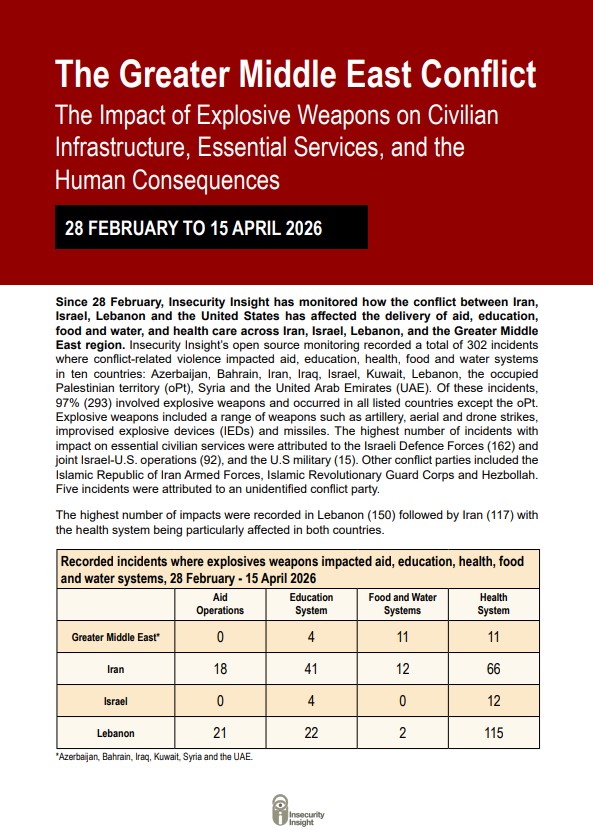
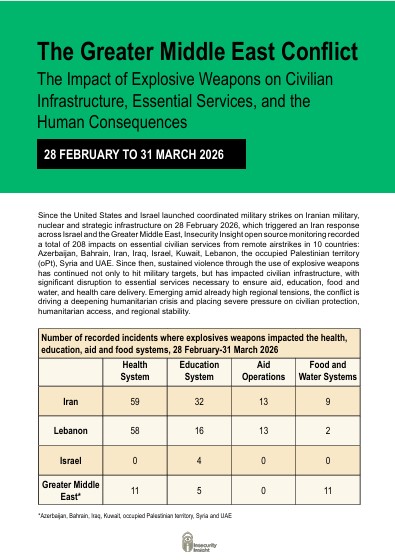
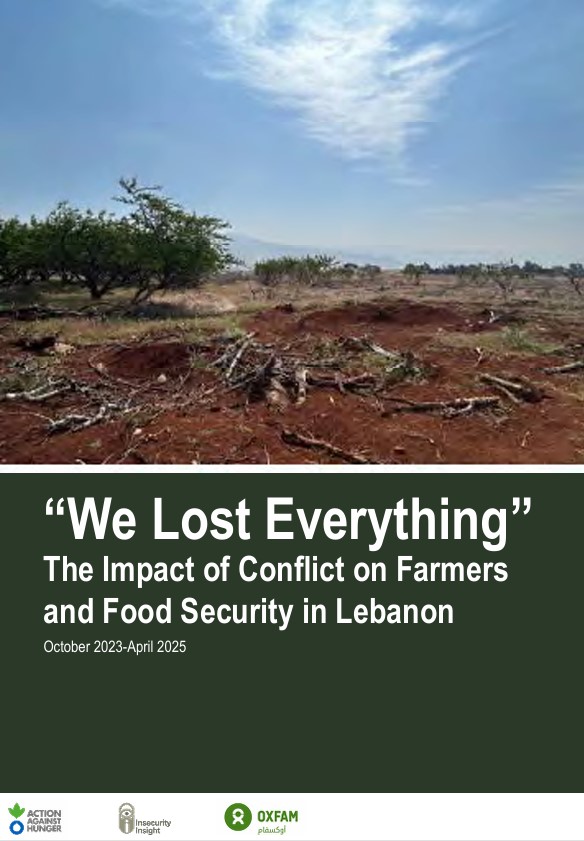
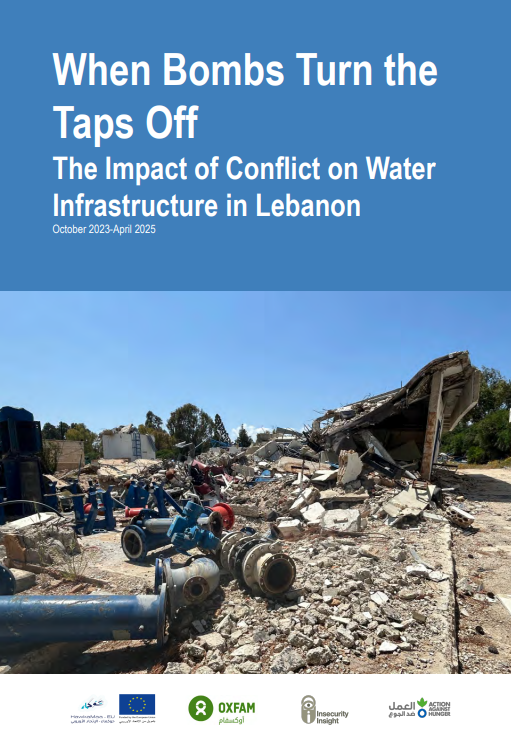
Insecurity Insight documents conflict events affecting aid operations, education, food and water systems, health care and protection as well as incidents of explosive weapons use in Lebanon.

Our data can be downloaded on the Humanitarian Data Exchange (HDX) and corresponding reports can be accessed below.

Quick Links

Health Care

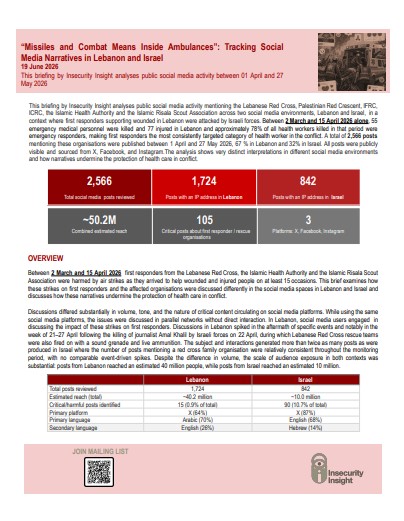
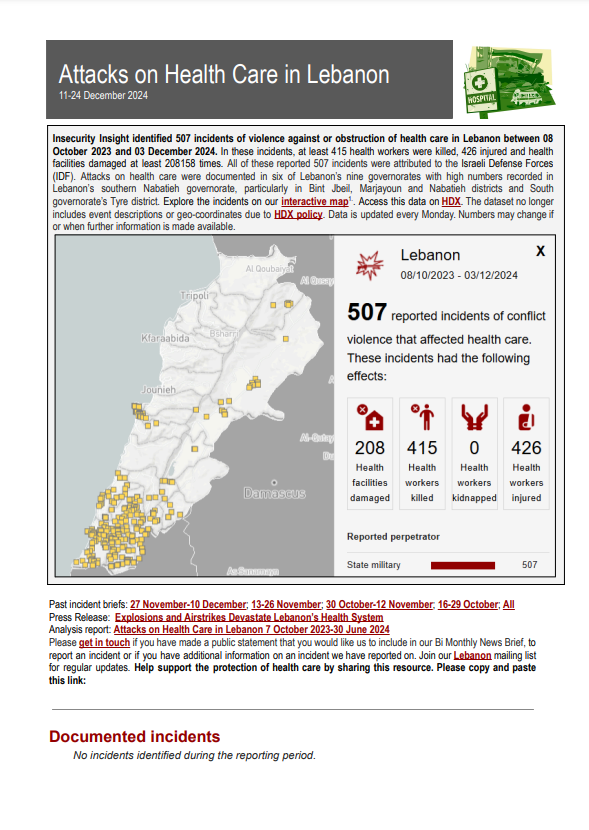
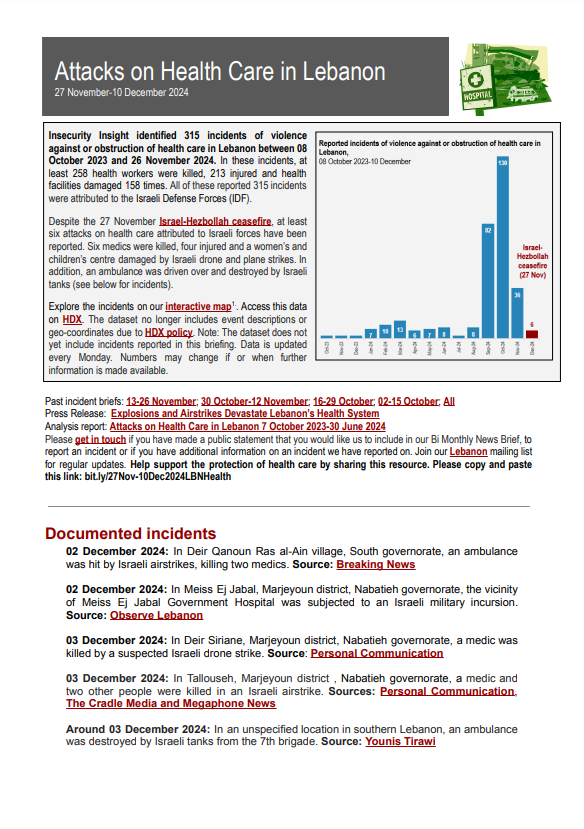
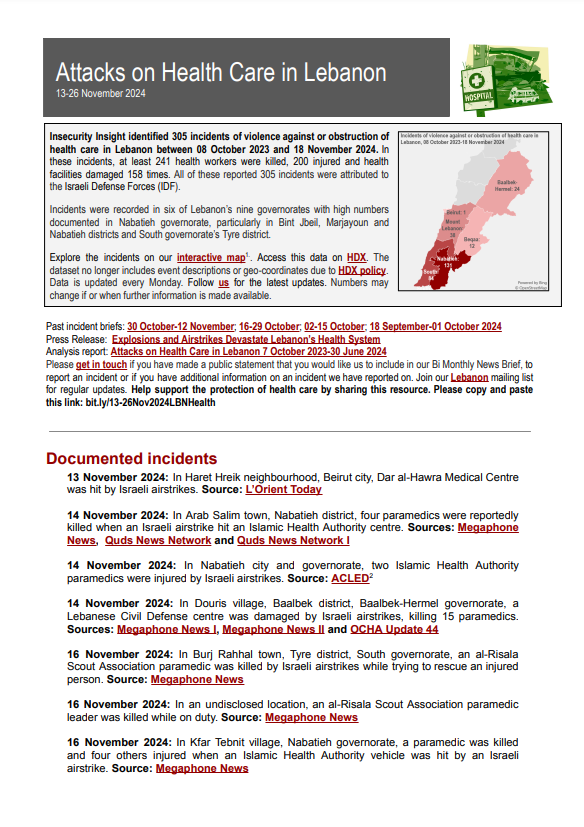
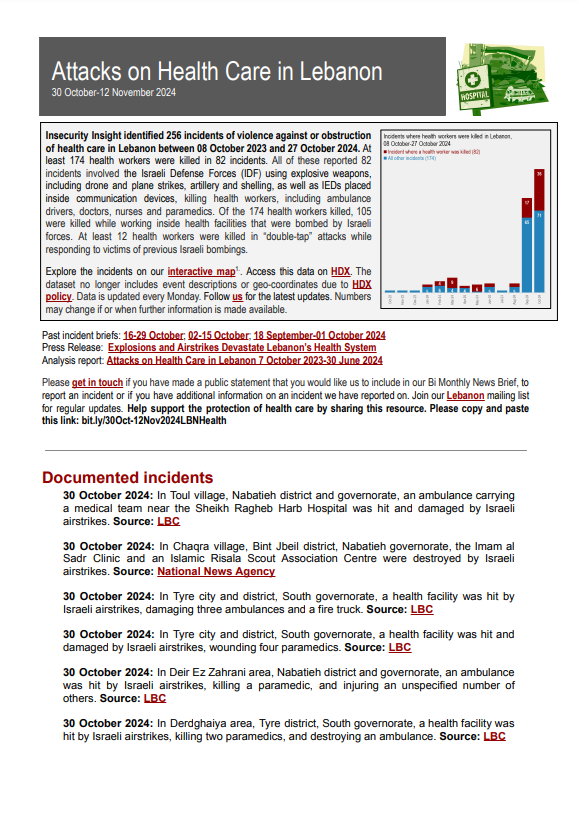
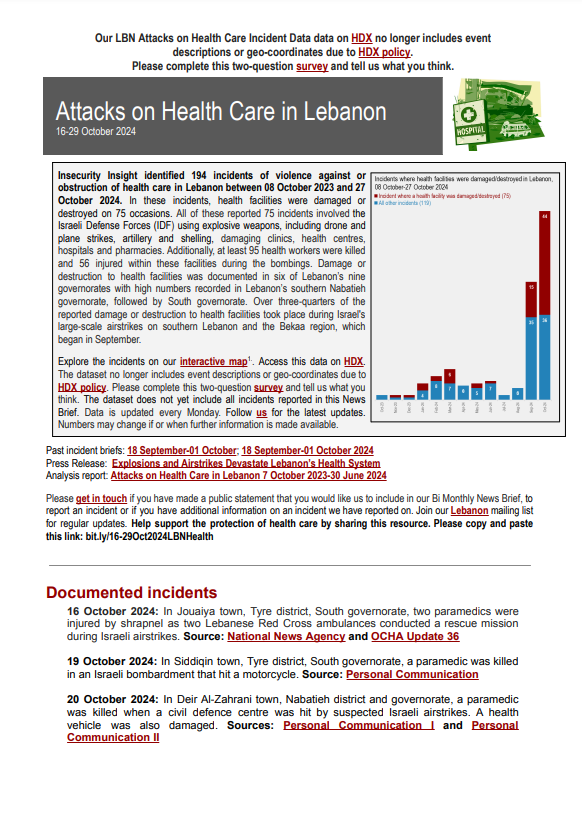
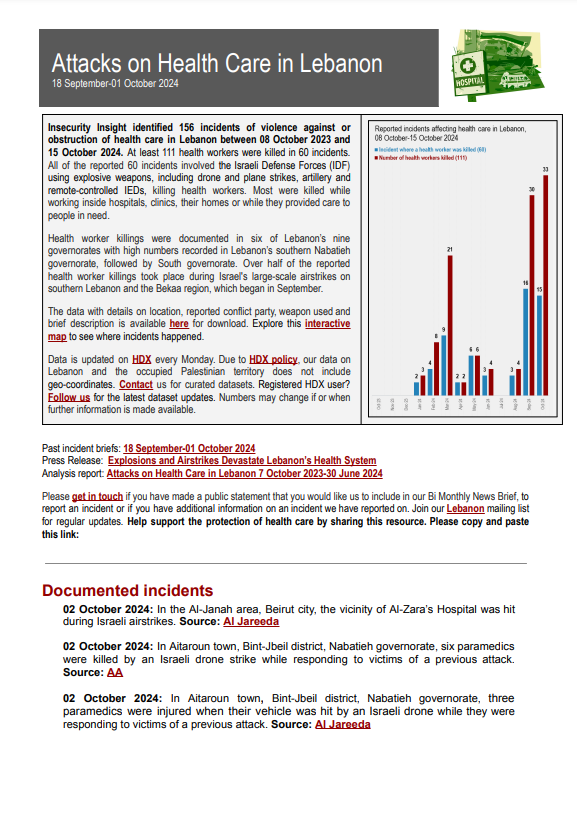
Insecurity Insight monitors attacks on health care in Lebanon and based on its data, the Lebanon chapter (in English and Arabic) of the 2024 Safeguarding Health in Conflict Coalition (SHCC) report Epidemic of Violence identified 485 incidents of violence against or obstruction of health care in Lebanon in 2024. In these incidents, 408 health workers were killed and 419 injured. Emergency medical services were attacked on at least 310 occasions and health facilities damaged at least 208 times.

– The health care system was attacked by Israeli air strikes, resulting in a severe humanitarian crisis and deflated economy.

– In the first eight days of the Israel Defense Forces’ (IDF) Operation Northern Arrow, 104 health workers were killed and 14 injured, and health facilities were damaged 75 times.

– One hundred out of 207 health centers were temporarily closed, and facilities struggled to cope with mass influxes of injured people.

Download the report data.

Published every two weeks, Insecurity Insight’s Attacks on Health Care New Brief tracks global threats and violence as well as protests and other events affecting the delivery of and access to health care. Explore our interactive map to see where incidents happened.

Aid in Danger

In 2020, generalised insecurity affected aid operations, assets and staff. Aid delivery was disrupted by shootings more than once in Baalbek-Hermel governorate. Allegations of misconduct by aid agencies or staff, as well as state intervention have impeded aid agencies’ operational space.

Aid vehicles were taken in armed carjacking’s in Beqaa and Baalbek-Hermel governorates. Theft of staff personal property and small amounts of money occurred in various locations in the country. Staff experienced threats, sexual harassment, and beneficiary or protester violence whilst working on project sites.

Aid agencies issued security instructions such as staff hibernation, limited staff movement and programme suspensions in response to the general security context, including crossfire shooting, police raids, armed robberies and carjacking’s. Data