Insecurity Insight documents conflict events affecting aid operations, education, food and water systems and health care in Mali.
Our data can be downloaded on the Humanitarian Data Exchange (HDX) and corresponding reports can be accessed below.
Following a coup d’état in 2012, Mali has faced recurring political violence and instability which has created and exacerbated humanitarian needs.
Insecurity Insight documents conflict events affecting aid operations, education, food and water systems and health care in Mali.
Our data can be downloaded on the Humanitarian Data Exchange (HDX) and corresponding reports can be accessed below.
Insecurity Insight monitors attacks on health care in Mali, and based on its data, the Mali chapter (in English and French) of the 2025 Safeguarding Health in Conflict Coalition (SHCC) report Care in the Crosshairs identified 22 incidents of violence against or obstruction of health care in Mali in 2025. At least 19 health workers were kidnapped. JNIM fighters armed with guns were implicated in nearly half of reported incidents, while a third were attributed to unidentified armed men. ISSP fighters also looted a health facility in Gao.3
FAMa troops reportedly violently searched medical centers, arrested health workers on accusations of providing care to conflict parties and seized medical supplies. In a joint operation, FAMa troops and Africa Corps mercenaries raided a village in Tombouctou, killing a health worker, looting and destroying infrastructure, and setting vehicles on fire.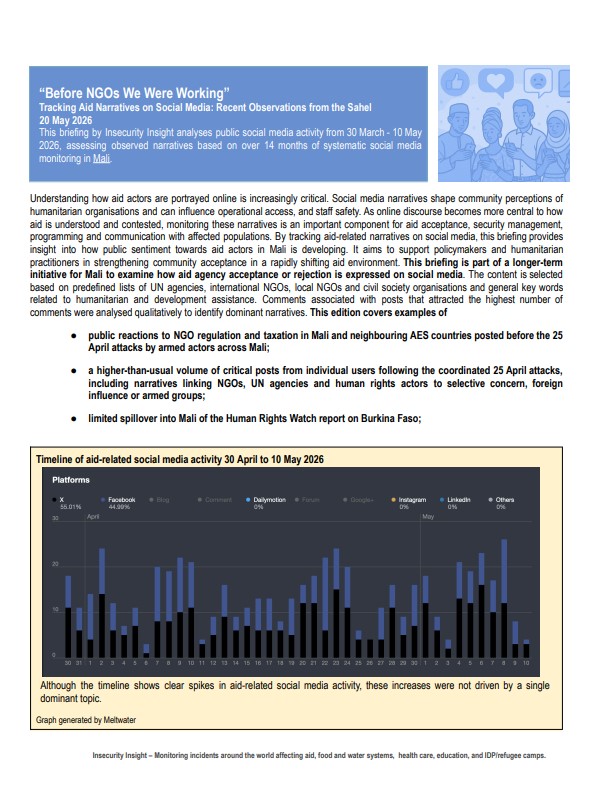
Tracking Aid Narratives on Social Media: Mali
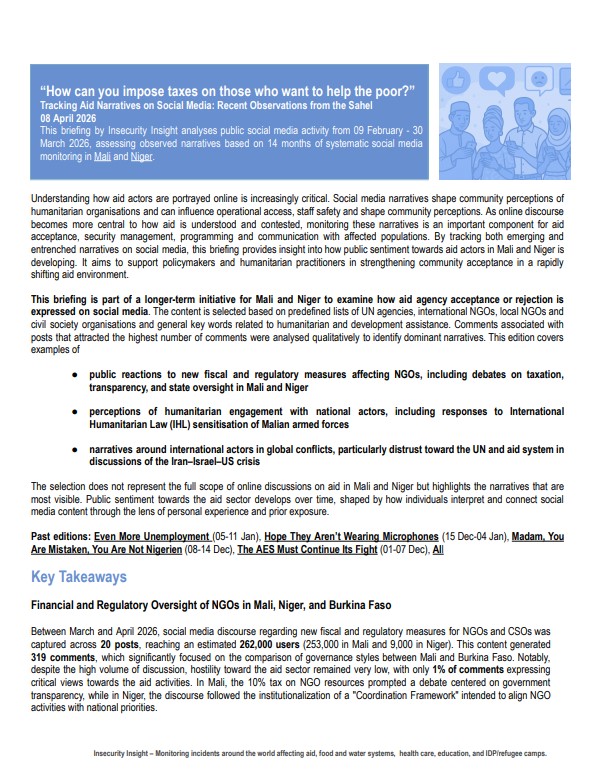
Tracking Aid Narratives on Social Media: Mali and Niger
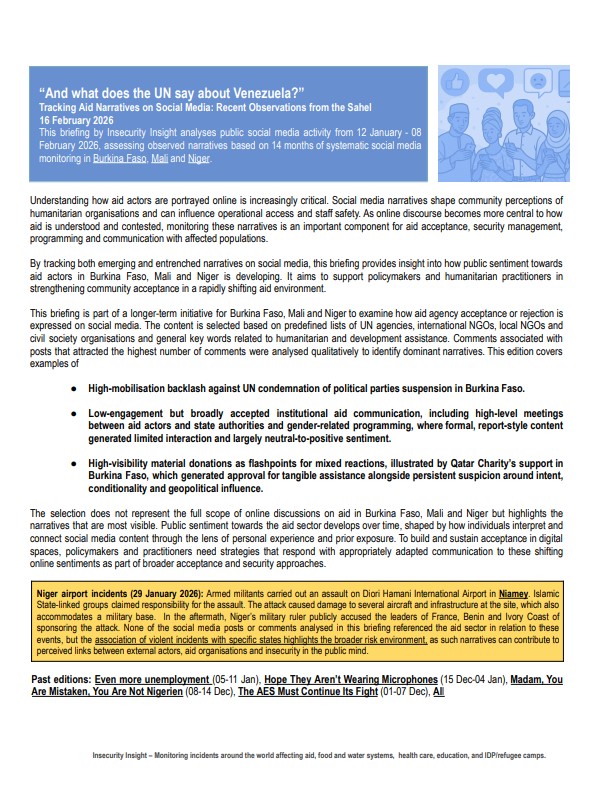
Tracking Aid Narratives on Social Media: Recent Observations from the Sahel
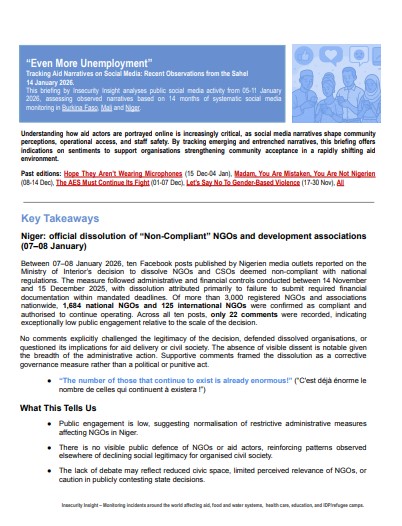
Tracking Aid Narratives on Social Media: Recent Observations from the Sahel
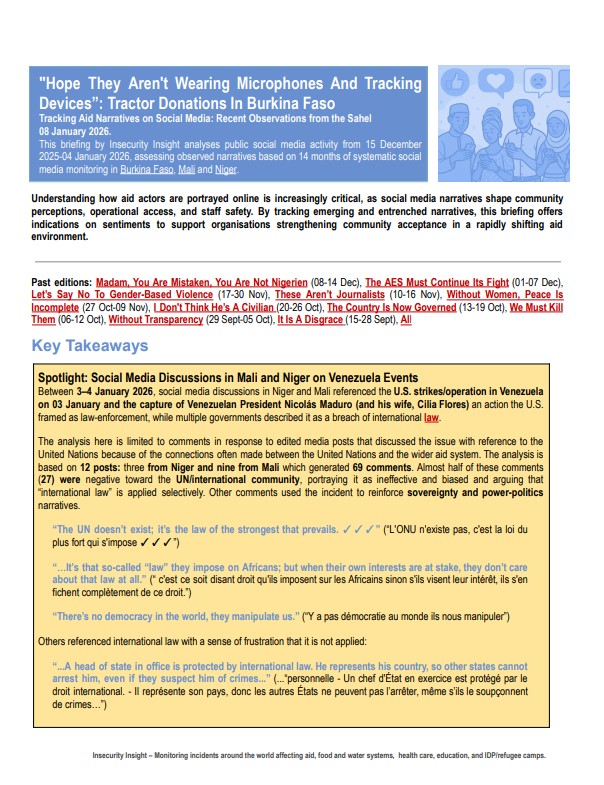
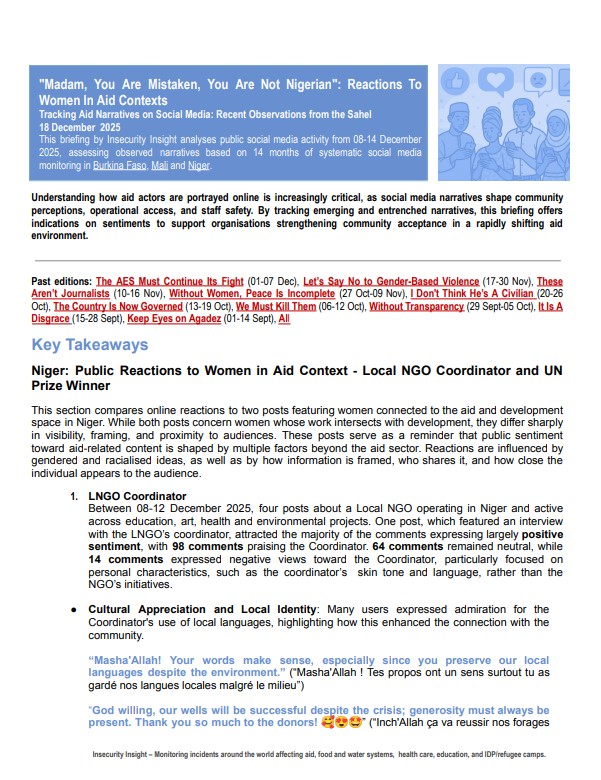
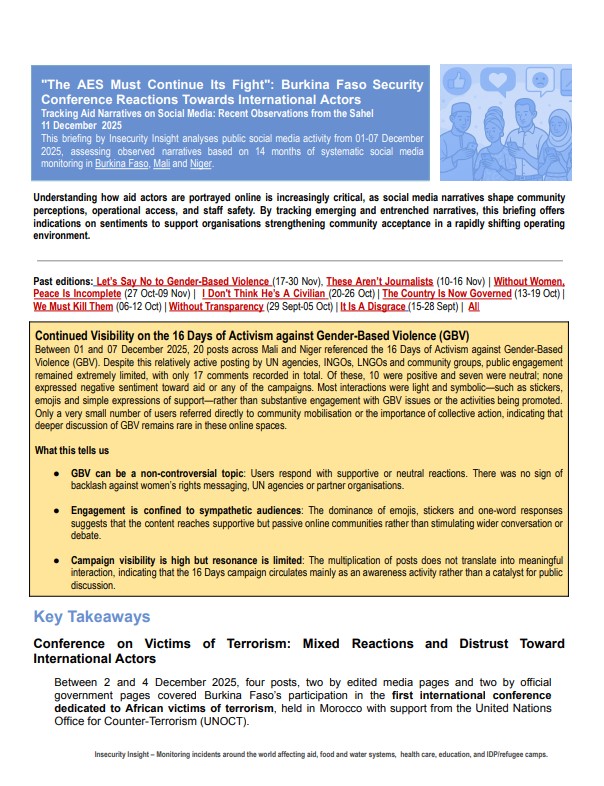
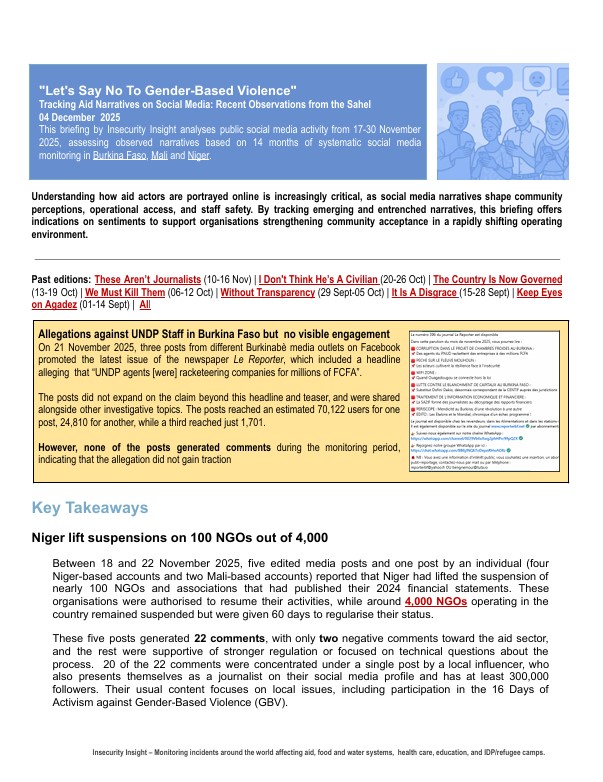
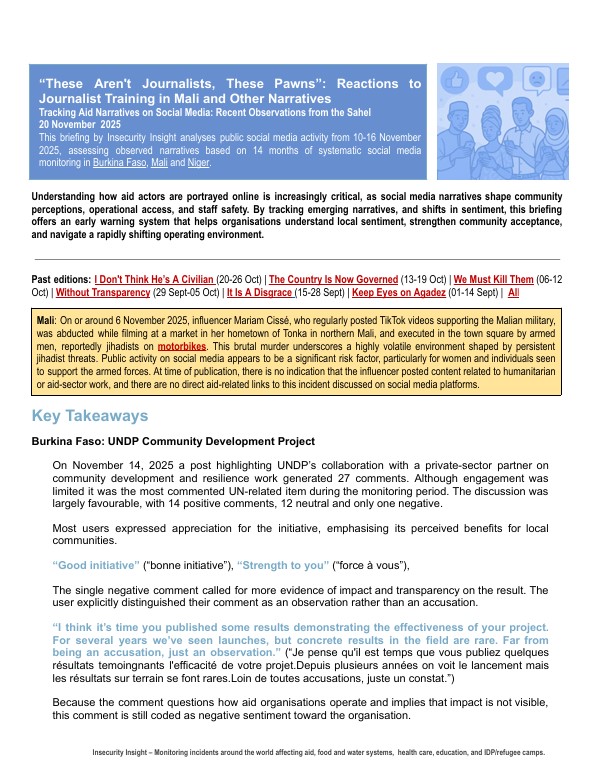
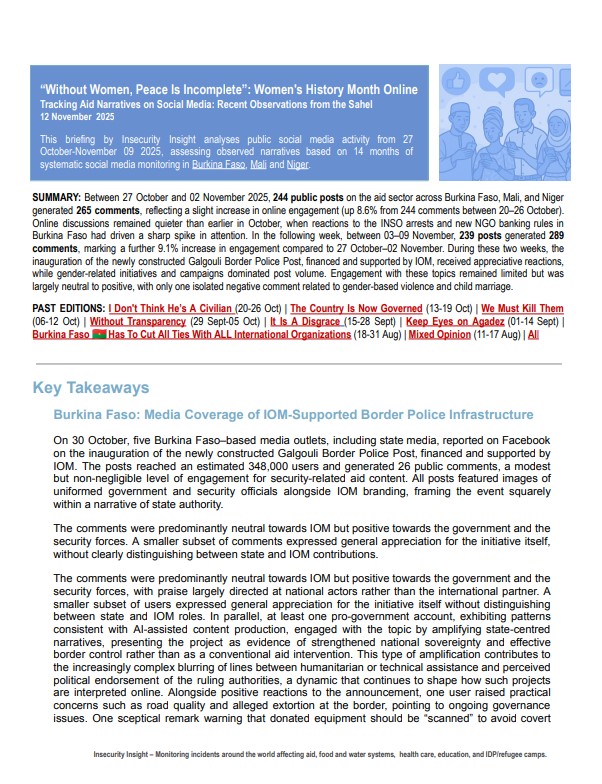
27 October-09 November 2025
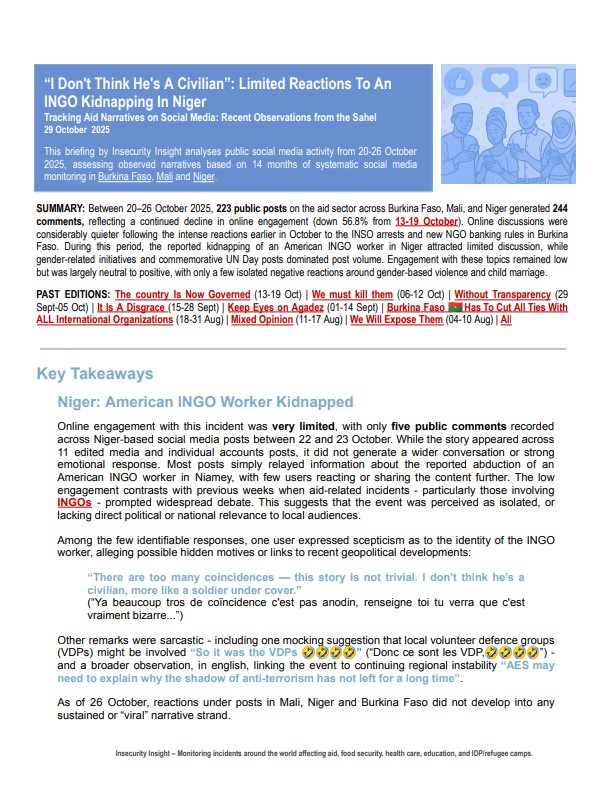
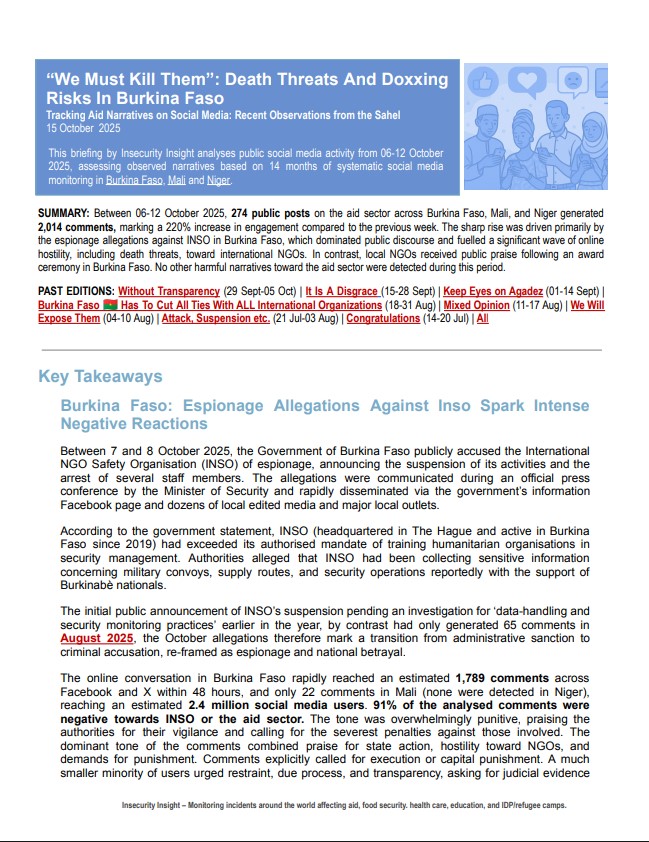
As part of our conflict and hunger project, Insecurity Insight monitors incidents of food-related violence in Mali. These include the deliberate burning of granaries by conflict parties, the looting of livestock and incidents of violence at markets. The data is accessible here.
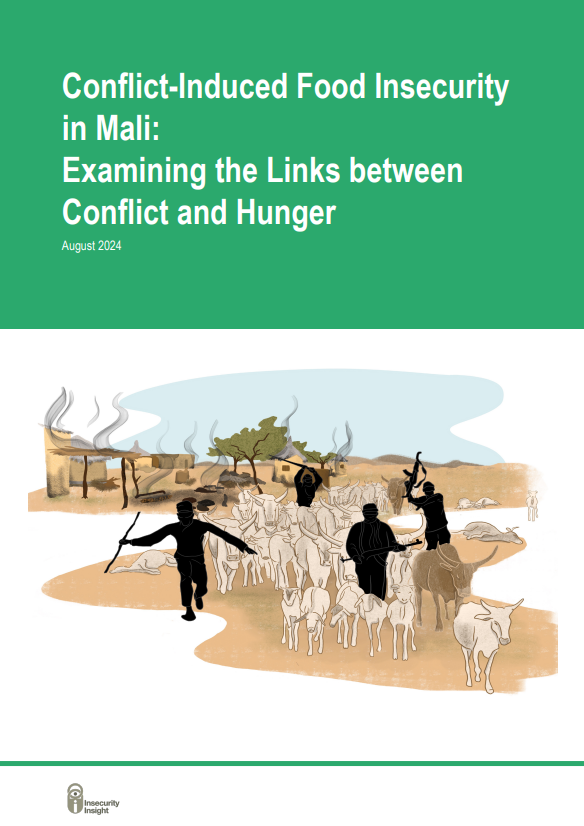
Conflict-Induced Food Insecurity in Mali: Examining the Links between Conflict and Hunger
Our latest report on conflict and hunger in Mali analyses key trends in incidents of food-related violence across five regions of the country – Ménaka, Mopti, Gao, Ségou and Timbuktu – between 1 January 2019 and 15 June 2024. It also considers the foreseeable consequences of the violence for food availability and access and anticipatory actions which key stakeholders can take to mitigate the worst effects of the violence before it fully materialises. The full report can be viewed here.
Conflict, Food Insecurity and Anticipatory Action
Insecurity Insight’s anticipatory action project aims to support humanitarian responses to conflict-induced food insecurity in Mali. It does so by helping to develop the knowledge required for humanitarian programmers and affected communities to employ an anticipatory mindset. This involves understanding the foreseeable consequences of conflict incidents for food security on affected communities and identifying actions which can be taken to mitigate these before their worst effects fully materialise. As part of the project, Insecurity Insight has issued a series of region-specific briefings focussing on Gao (view in English or French), Mopti (view in English or French), Ménaka (view in English or French), Ségou (view in English or French) and Timbuktu (view in English or French).
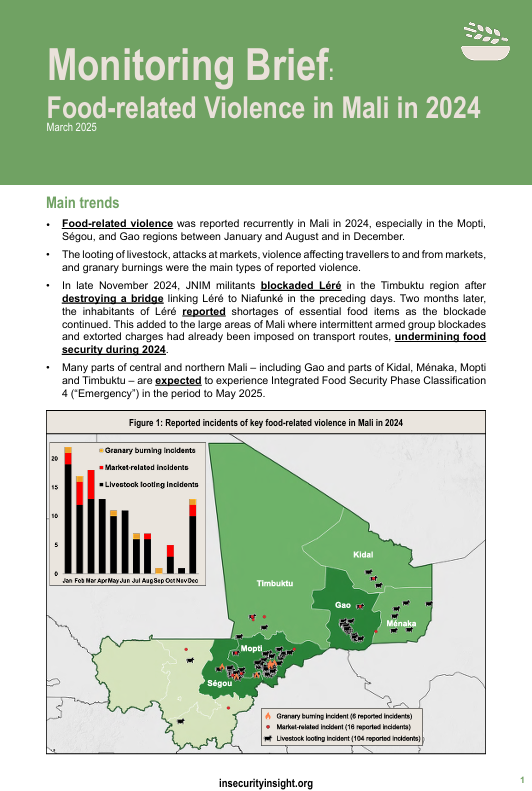
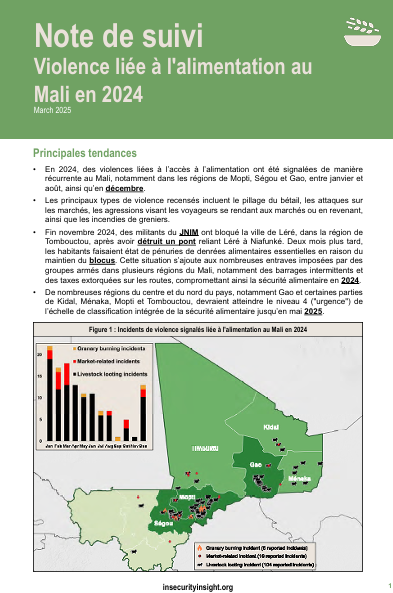
mars 2025
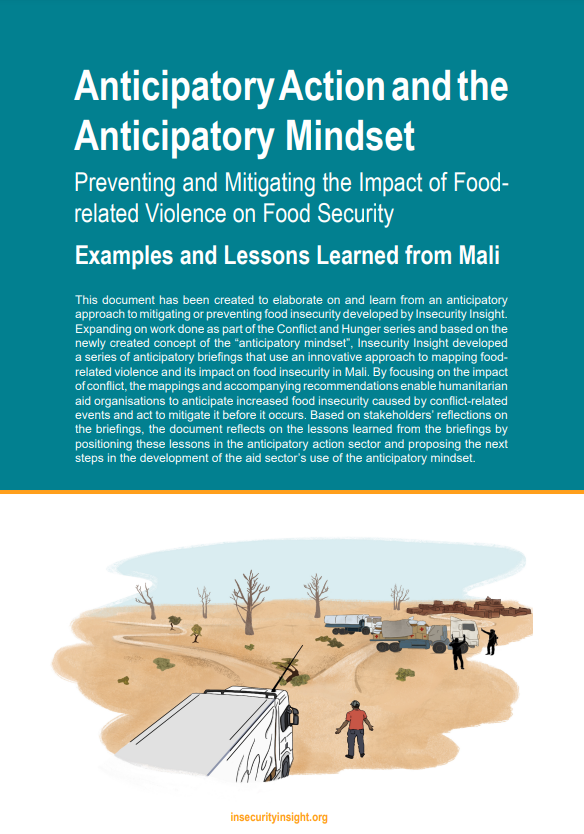
Examples and Lessons Learned from Mali
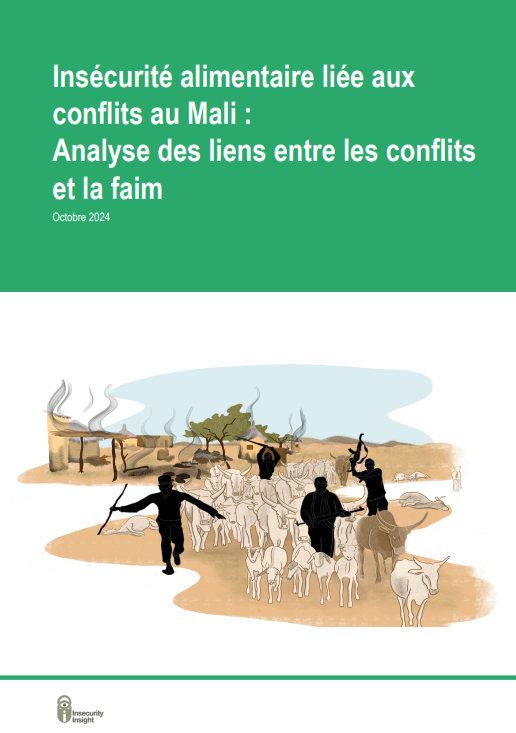
Examining the Links between Conflict and Hunger