Occupied Palestinian Territory

In October 2023, violence seriously escalated in the occupied Palestinian territory (opt), especially the Gaza Strip. Large-scale internal displacement, severe food insecurity and increased dependency on humanitarian aid has resulted.

Insecurity Insight monitors conflict events affecting health care, food and water systems and protection as well as incidents of conflict-related sexual violence and explosive weapons use in the occupied Palestinian territory.

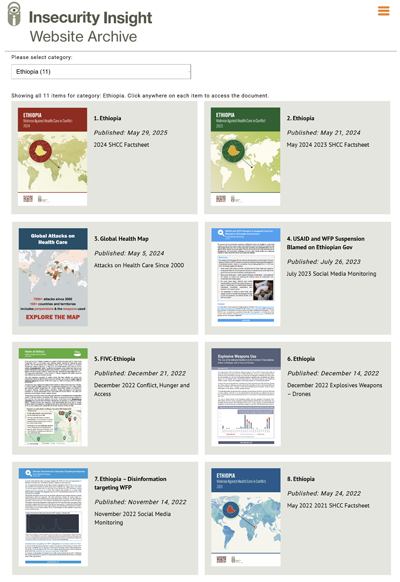
Our data can be downloaded on the Humanitarian Data Exchange (HDX) and corresponding reports can be accessed below.

Quick Links

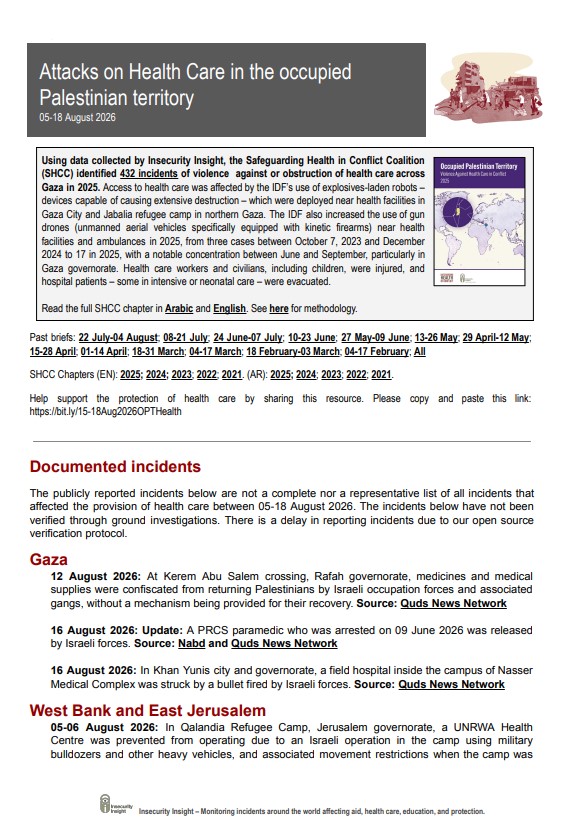
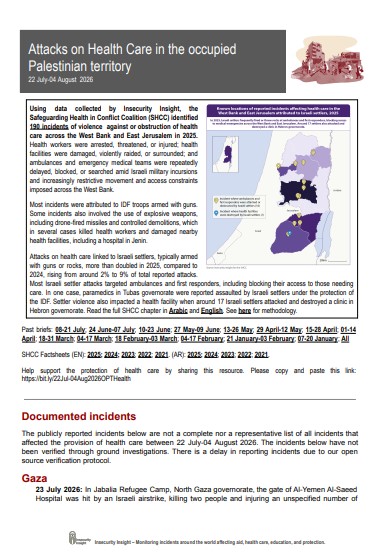
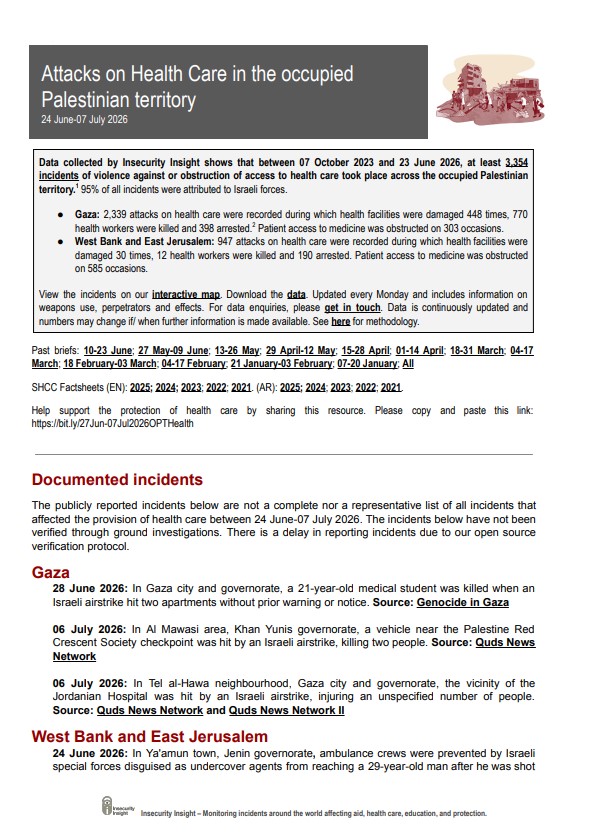
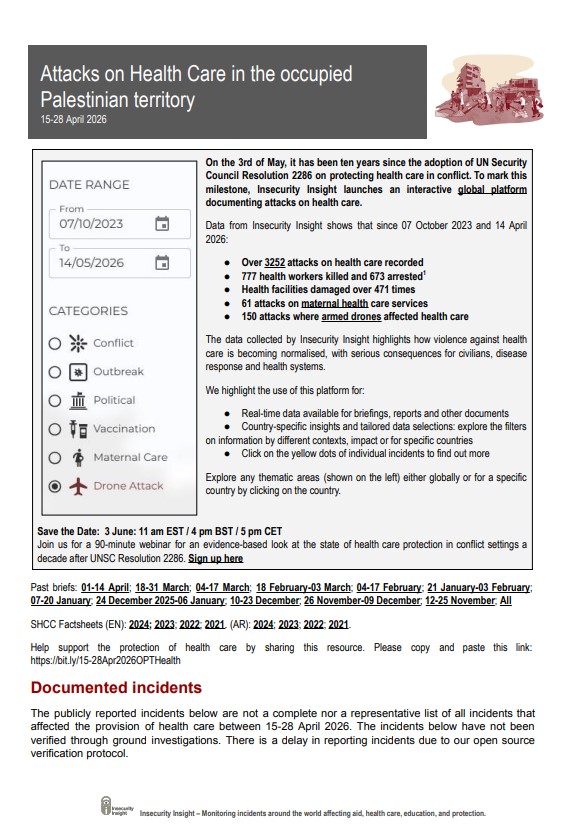
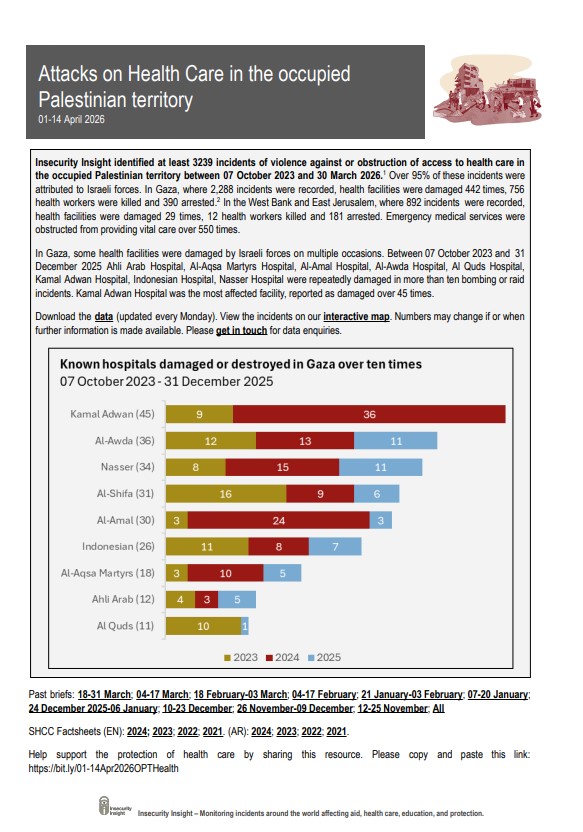
Health

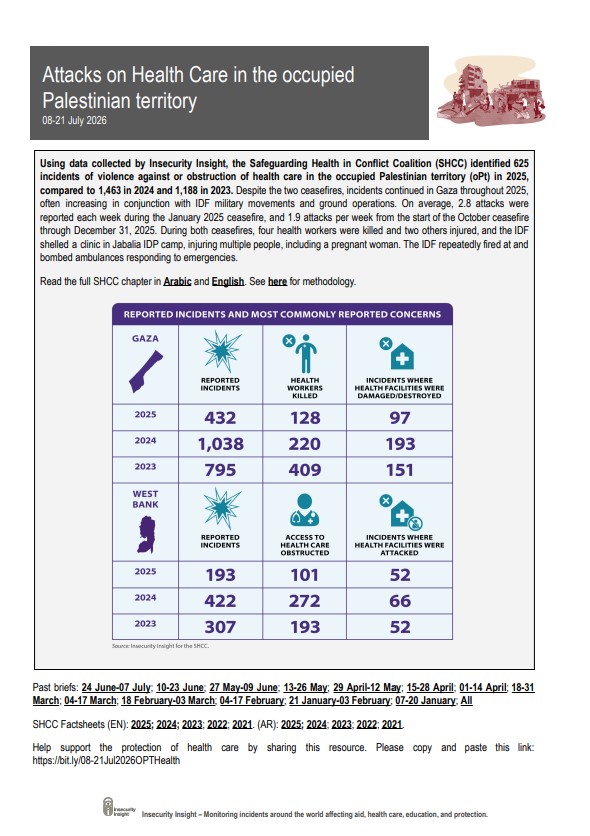
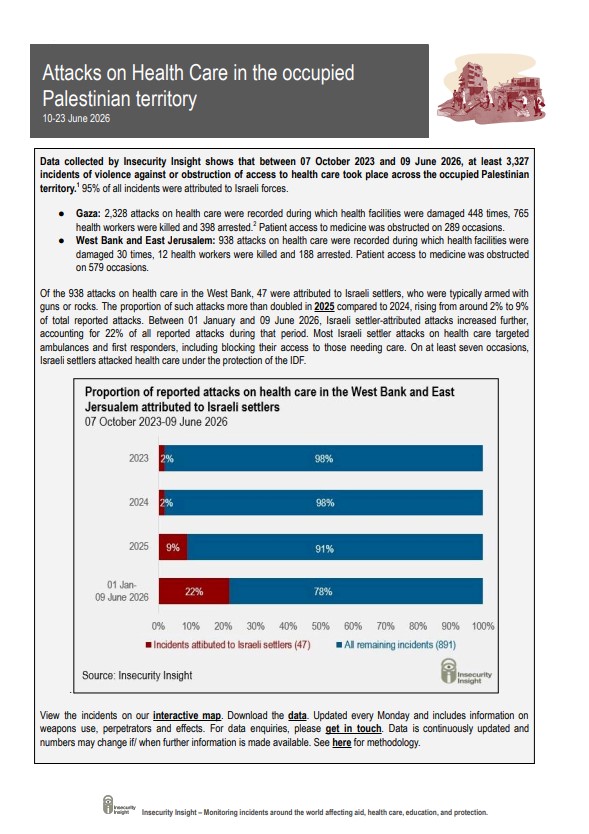
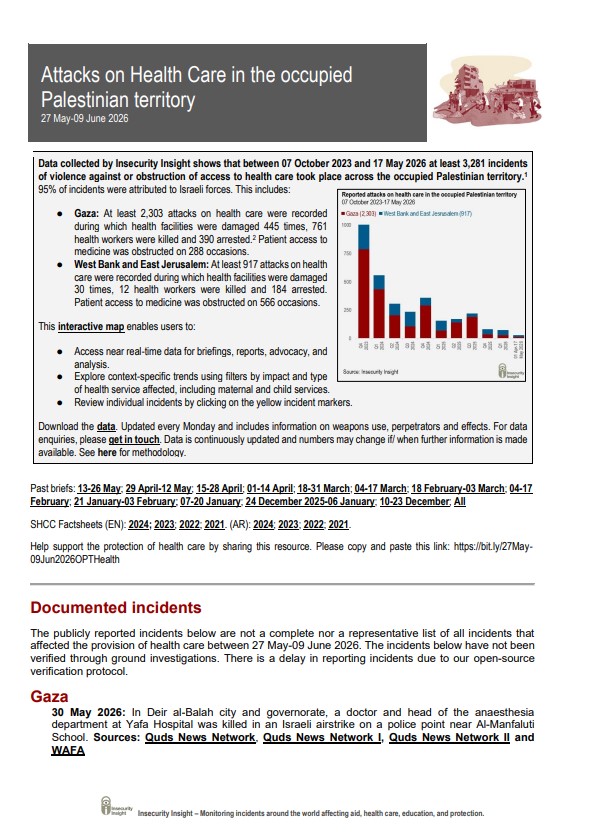
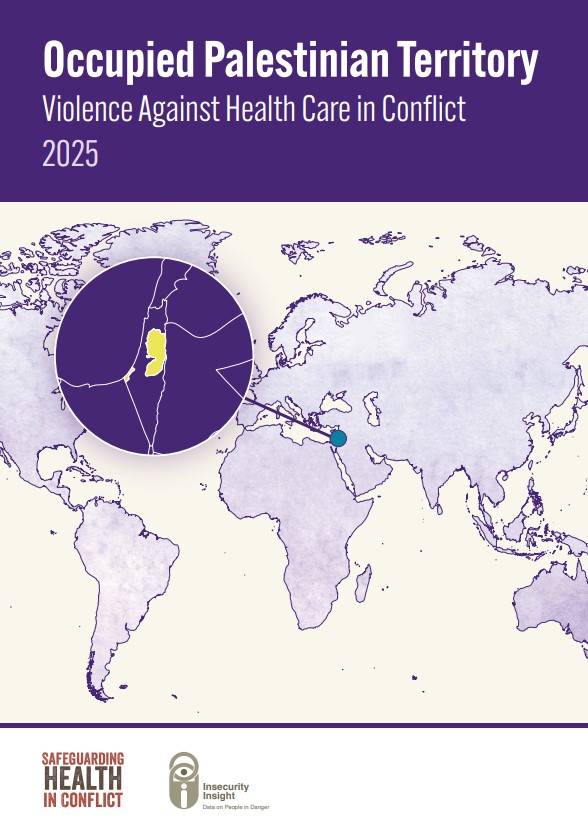
Insecurity Insight monitors attacks on health care in the oPt, and based on its data, in the oPt (in Arabic and English) chapter of the 2024 Safeguarding Health in Conflict Coalition (SHCC) report Epidemic of Violence identified 1,361 incidents of violence against or obstruction of health care in 2024.

In the Gaza Strip, where 940 incidents were recorded, there was a 22% increase from 2023, when 770 incidents were recorded. In these incidents, at least 218 health workers were killed and 192 arrested. Health facilities were damaged or destroyed at least 192 times and raided or occupied multiple times. Using different methods, other sources report far higher numbers of health workers killed. According to Healthcare Workers Watch, 1,200 health workers have been killed since October 2023.

In the West Bank, including East Jerusalem, the recorded incidents doubled to 418 incidents in 2024, compared to 208 in 2023. In these incidents, 80 health workers were arrested, 75 injured and eight killed, and health facilities were damaged or destroyed at least 13 times and raided 21 times. Access to health care was blocked or delayed at least 272 times, which left patients without access to medical treatment, proving fatal in some circumstances.

Download the report data.

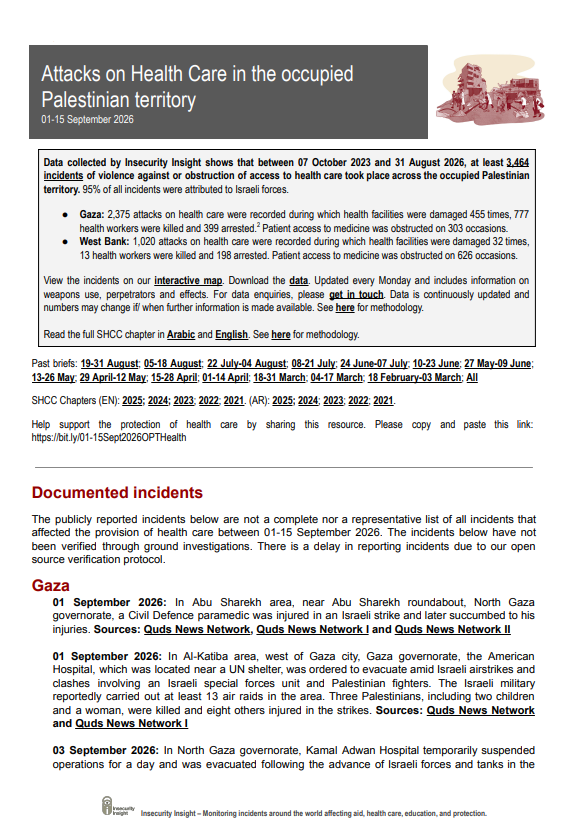
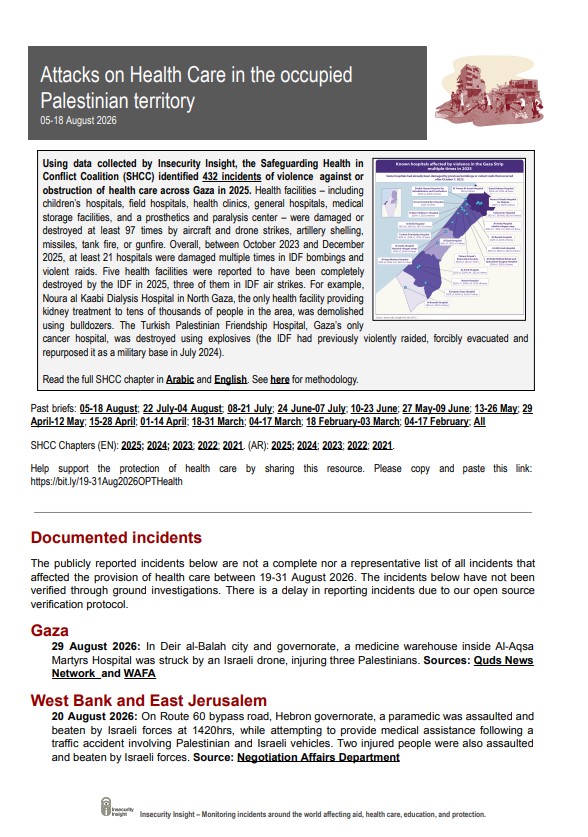
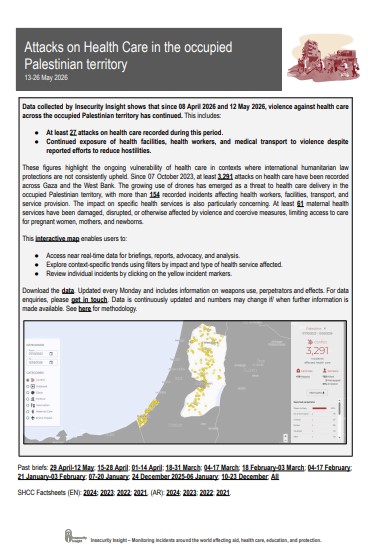
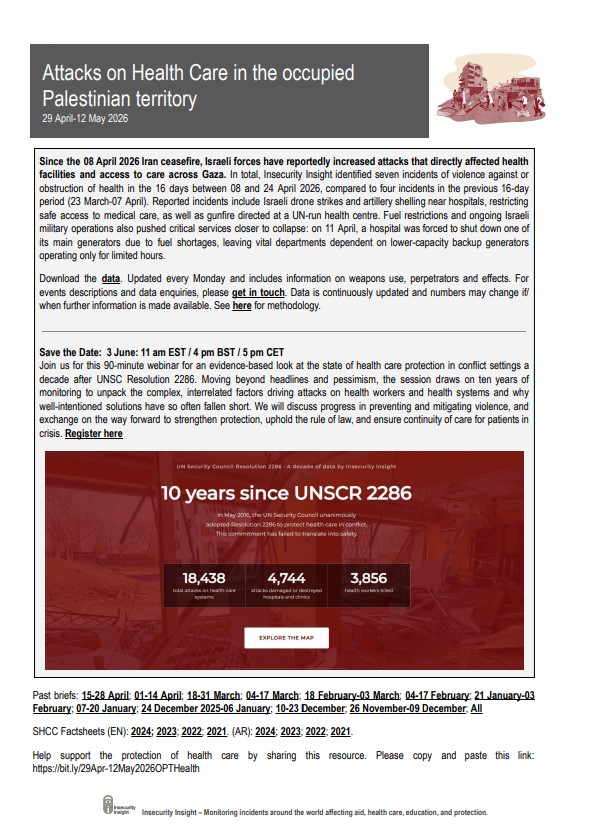
Published every two weeks, Insecurity Insight’s Attacks on Health Care New Brief tracks global threats and violence as well as protests and other events affecting the delivery of and access to health care. Explore our interactive map to see where incidents happened.

Conflict and Hunger

As part of its conflict and hunger project, Insecurity Insight monitors food-related violence (e.g. the bombing of food markets and bakeries and attacks on farmers) in the oPt. Datasets from this monitoring are available to download on the Humanitarian Data Exchange (HDX). Based on analysis of this data, Insecurity Insight has also produced reports focussing on the Gaza Strip and the West Bank since October 2023.

Gaza Strip:

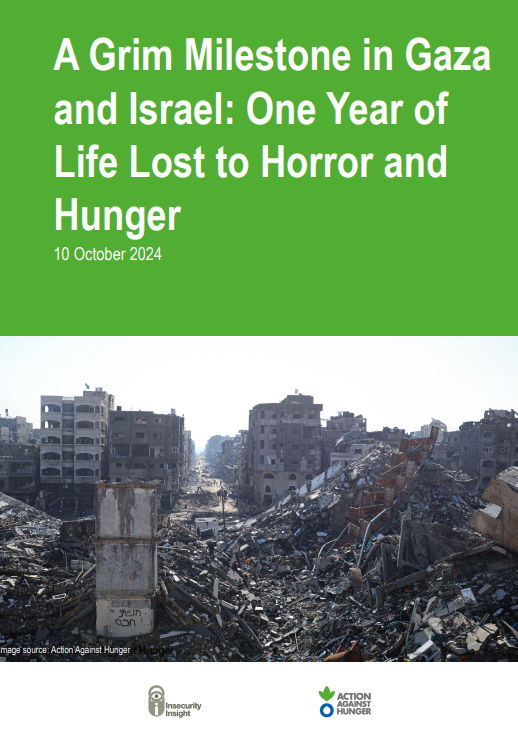
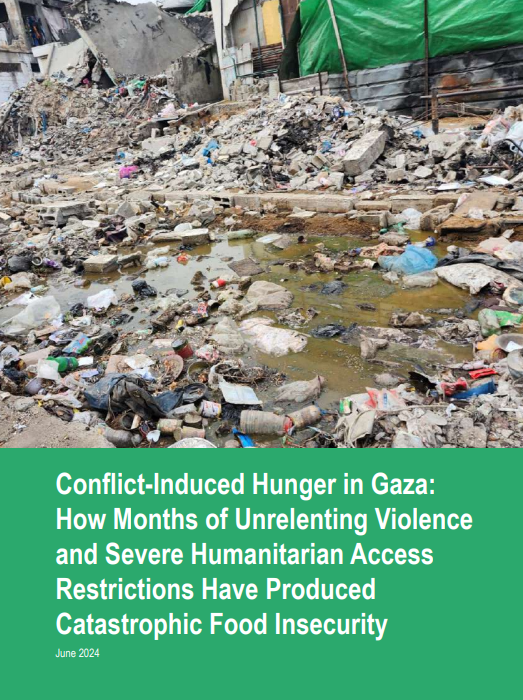
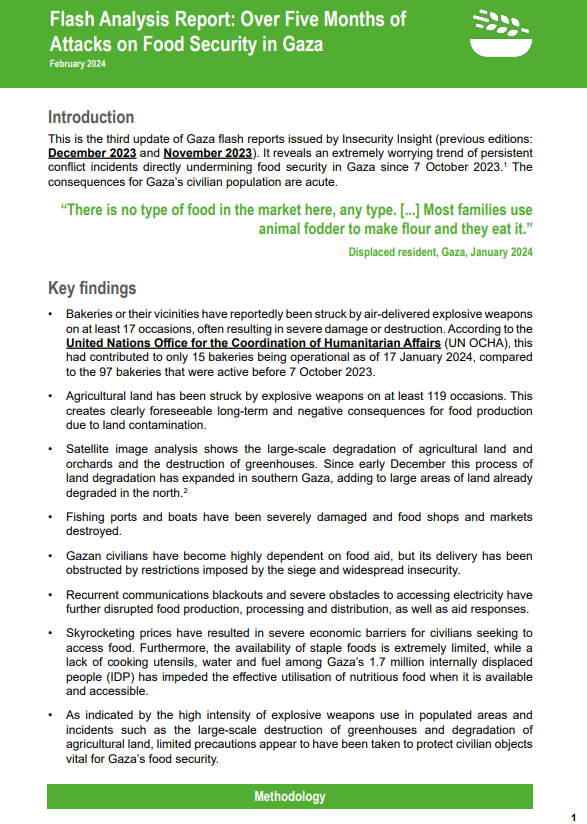
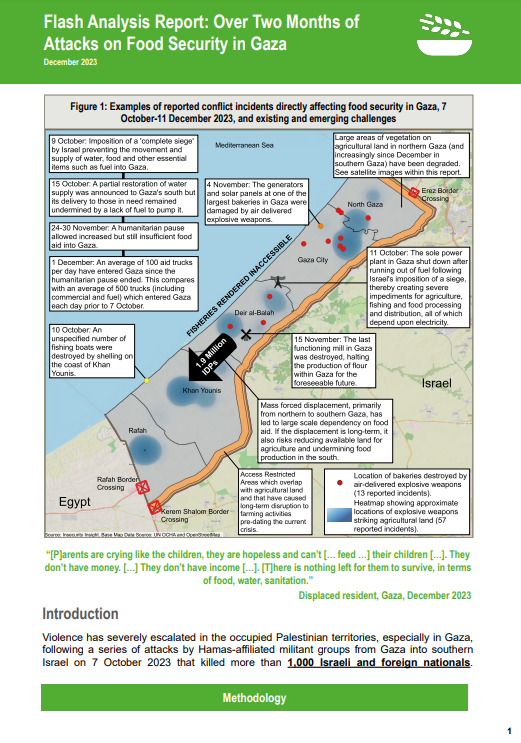
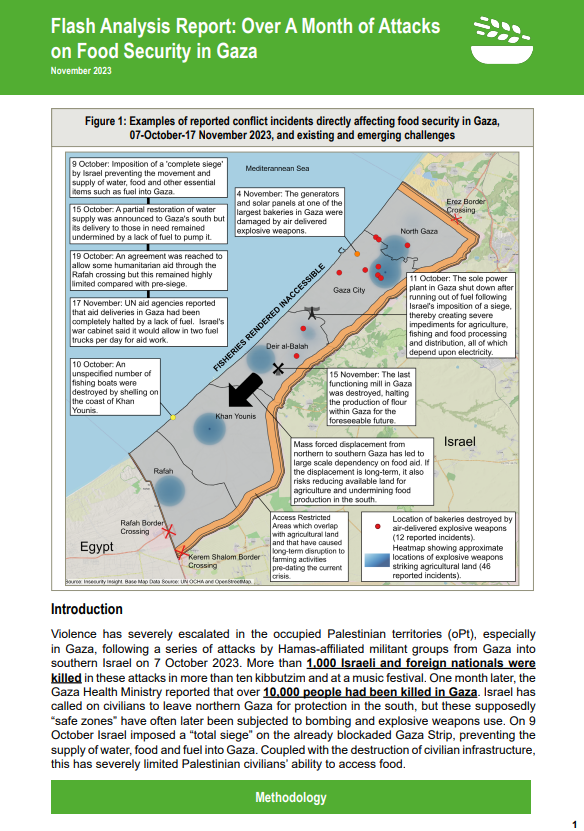
Since the severe escalation of hostilities in Gaza in October 2023, bakeries have been bombed, agricultural land has been degraded and large areas of greenhouses have been destroyed. Meanwhile, the entrance of humanitarian food aid has been severely restricted. Insecurity Insight has documented how this situation has produced catastrophic food insecurity in Gaza in four reports.

West Bank:

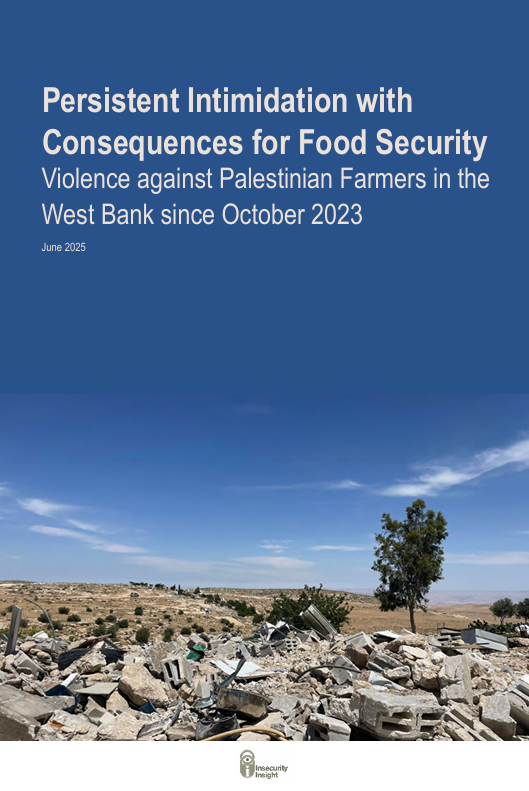
While global attention has been captivated by the extensive destruction of Gaza, violence has surged in the West Bank and seriously affected Palestinian farming communities. In its report – Persistent Intimidation with Consequences for Food Security – Insecurity Insight has documented repeated violent attacks, threats and intimidation towards West Bank Palestinian farmers since October 2023. The incidents were especially frequent during the olive harvest in October 2024. Israeli settlers were reported as perpetrators in the majority of incidents. Remaining incidents were primarily attributed to Israeli security forces. The violence has been reported in addition to severe Israeli administrative restrictions limiting the ability of Palestinian farmers to conduct their work.

Protection

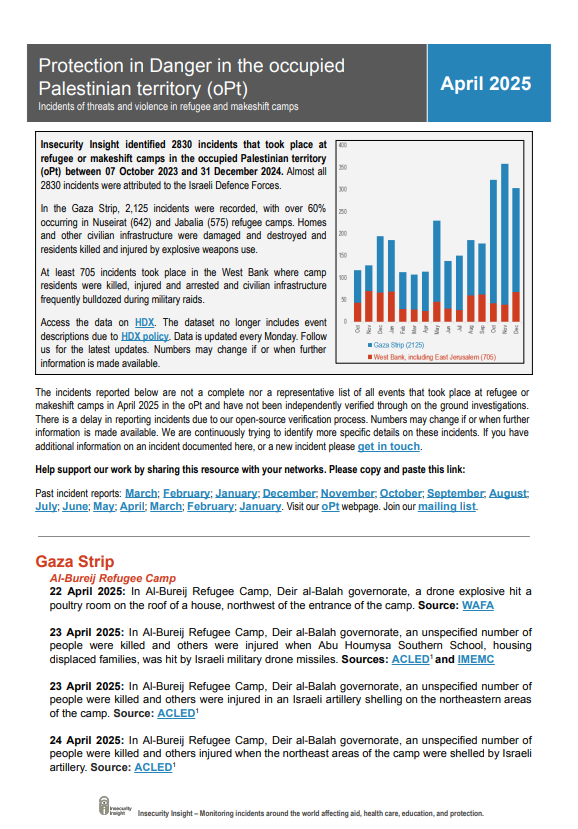
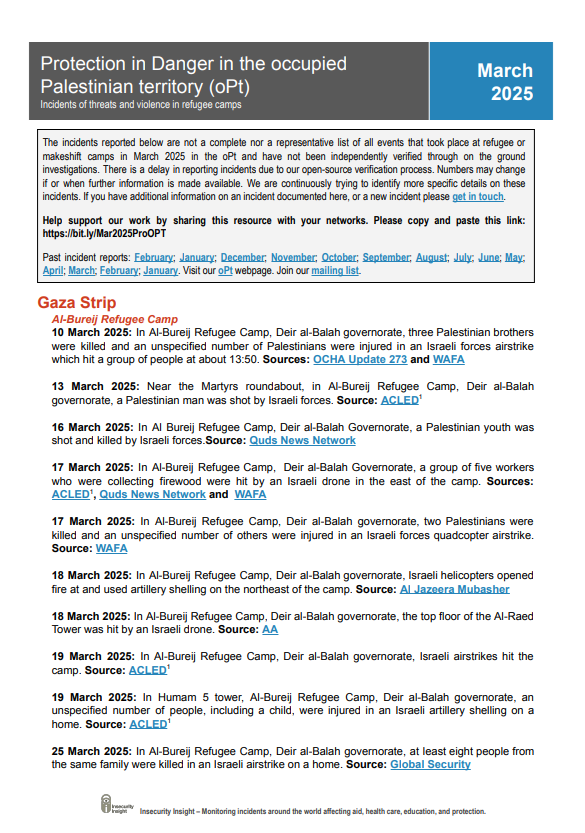
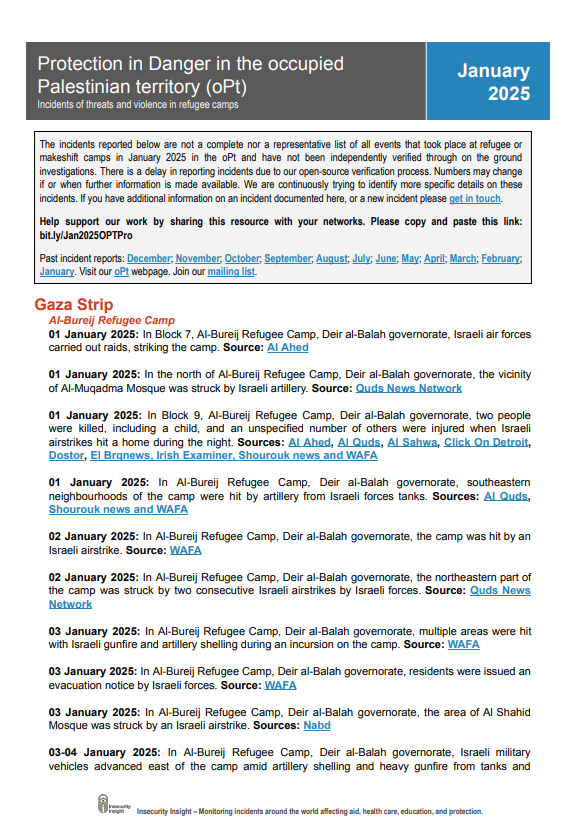
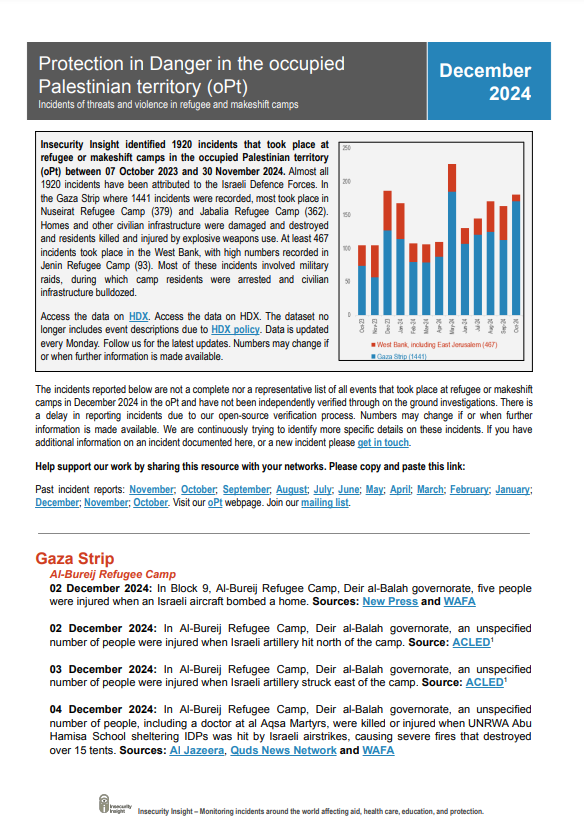
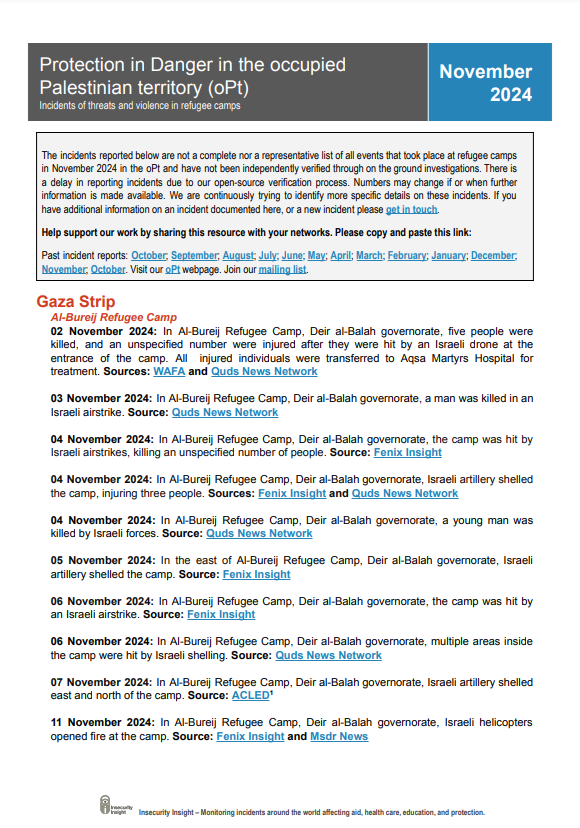
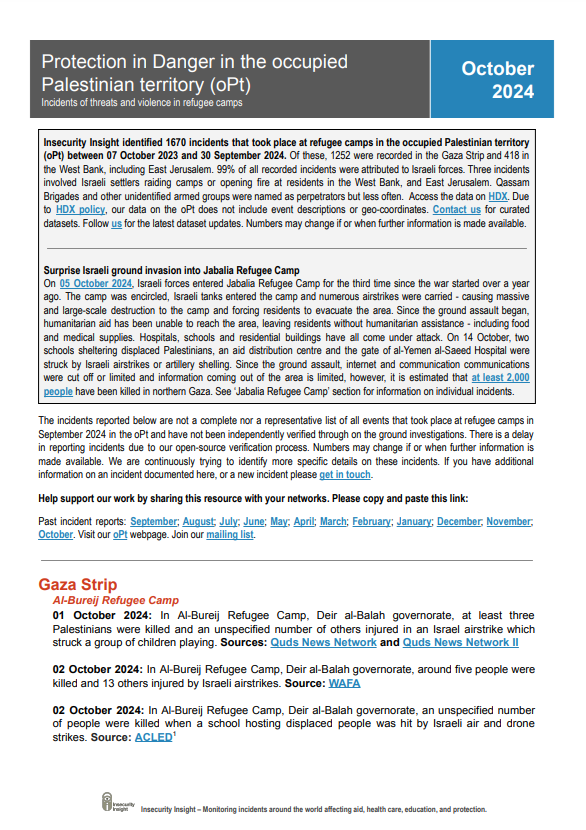
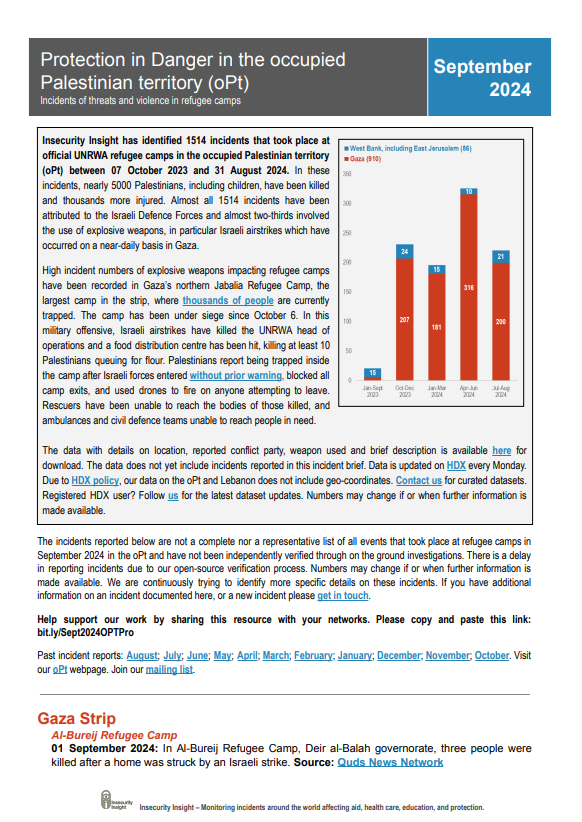
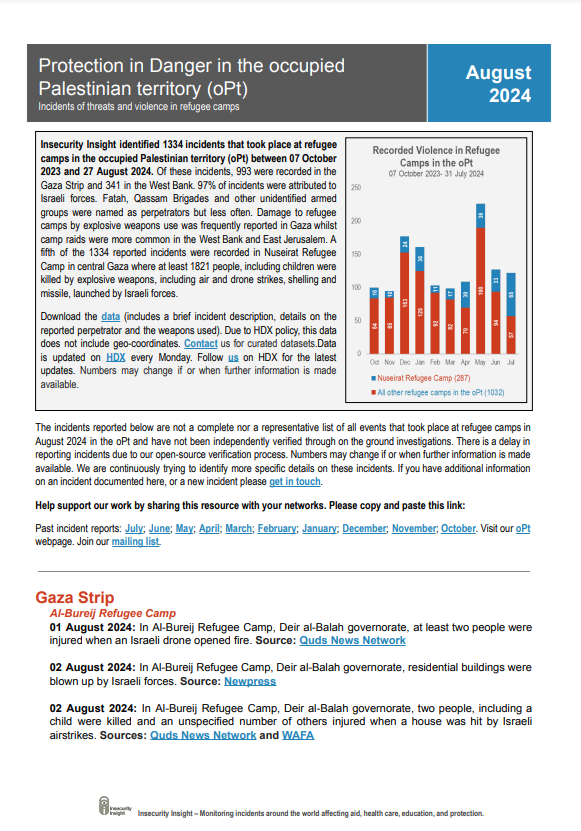
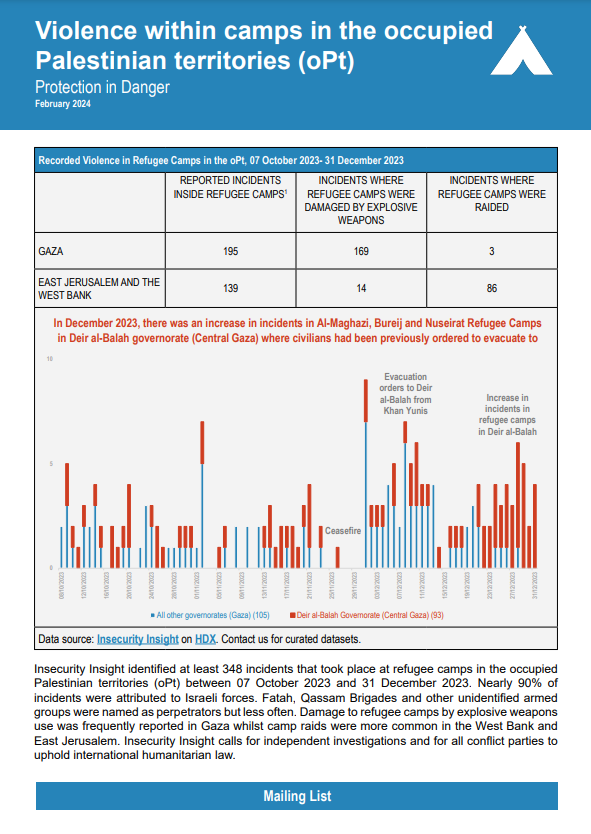
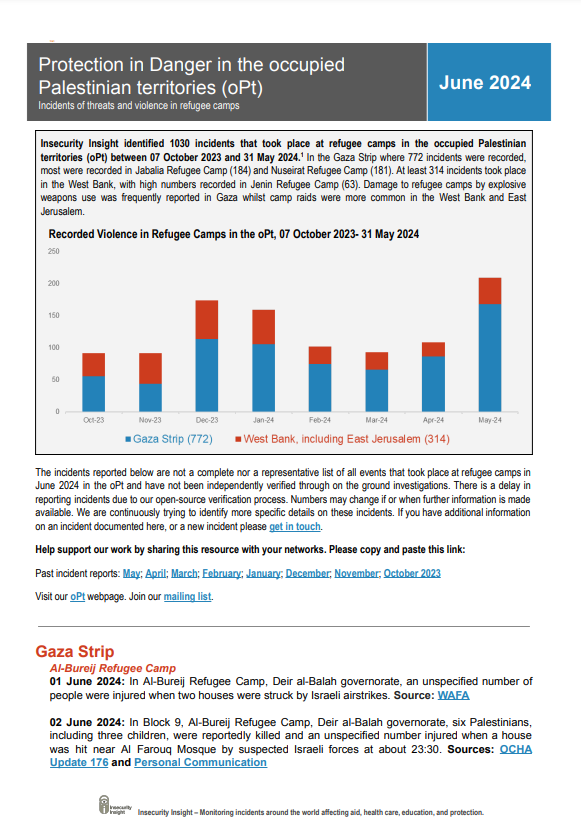
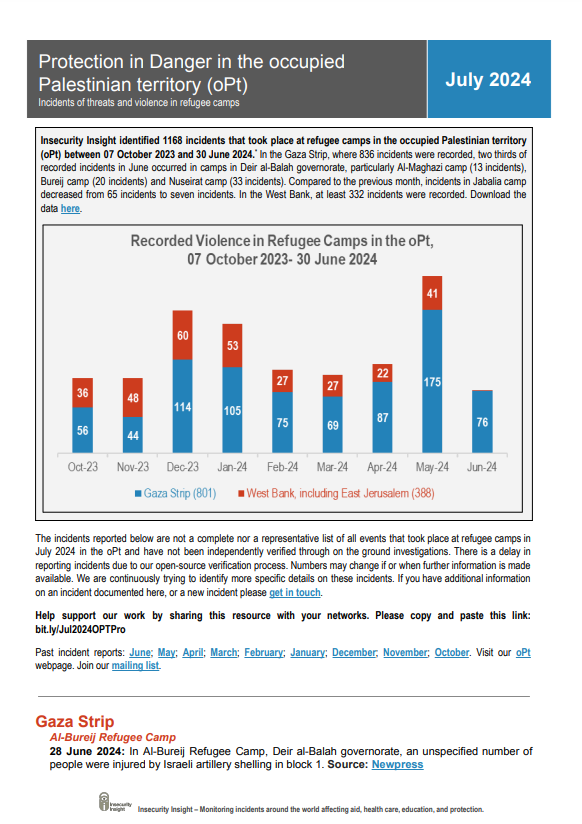
Since violence seriously escalated in Israel and the occupied Palestinian territories on 7 October 2023, Insecurity Insight has been documenting the increase in attacks at refugee camps in Gaza and the West Bank. This data is available for download here

In Gaza, damage to refugee camps by explosive weapons has been frequently reported since October 2023 with some camps being hit multiple times a day or on a daily basis. Within the West Bank and East Jerusalem, Israeli forces increased their security operations in refugee camps, killing, arresting and injuring camp residents and damaging public and private infrastructure. The majority of incidents have been attributed to Israeli forces, whilst Fatah, the Qassam Brigades and other unidentified armed groups have also been named as perpetrators but less often. 

Sexual Violence

Insecurity Insight documents reported incidents of conflict-related sexual violence in the occupied Palestinian territories. Although many incidents go unreported, our data – available for download here – provides insights into the patterns and contexts in which these incidents take place.

Following the events of 7 October 2023, Insecurity Insight documented an increase of publicly reported incidents affecting Palestinian detainees during their detention inside Israeli detention centres or whilst being transferred to these facilities.  

Attacks on Education

Since 7 October 2023, Insecurity Insight has documented an increase in attacks and threats to education facilities in the occupied Palestinian territories. This data is available for download here.

In Gaza, education facilities – including schools, UN schools and universities – have suffered large-scale damage and destruction primarily from explosive weapons. Additionally, since the increase in hostilities and the large-scale Israeli evacuation orders, these schools have been used as temporary shelters for displaced persons. As a result, children living in Gaza, who made up nearly half of the population in the Gaza Strip as of 2022, have been deprived of education. 

In the West Bank, schools have been subjected to Israeli military raids with tear gas and sound bombs being fired on the school premise and students and teachers being arrested, injured or killed. 
Explosive Weapons

Since 7 October 2023, Israeli forces have carried out an intensive aerial bombardment campaign on the Gaza Strip – damaging and destroying civilian infrastructure including health facilities, education facilities and refugee camps and killing or severely injuring thousands of civilians, particularly women and children. 
Insecurity Insight has been documenting the use of the explosive weapons which impacted health care, education, protection and food security. This data is available for download here. Our latest report examines the impact of explosive weapon use in populated areas (EWIPA) on healthcare in 2023.