12th Ebola Outbreak
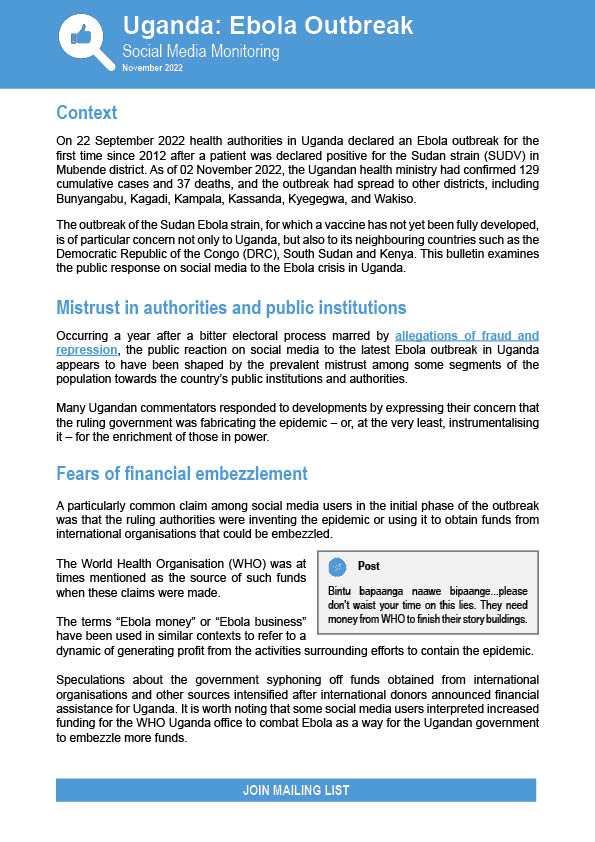
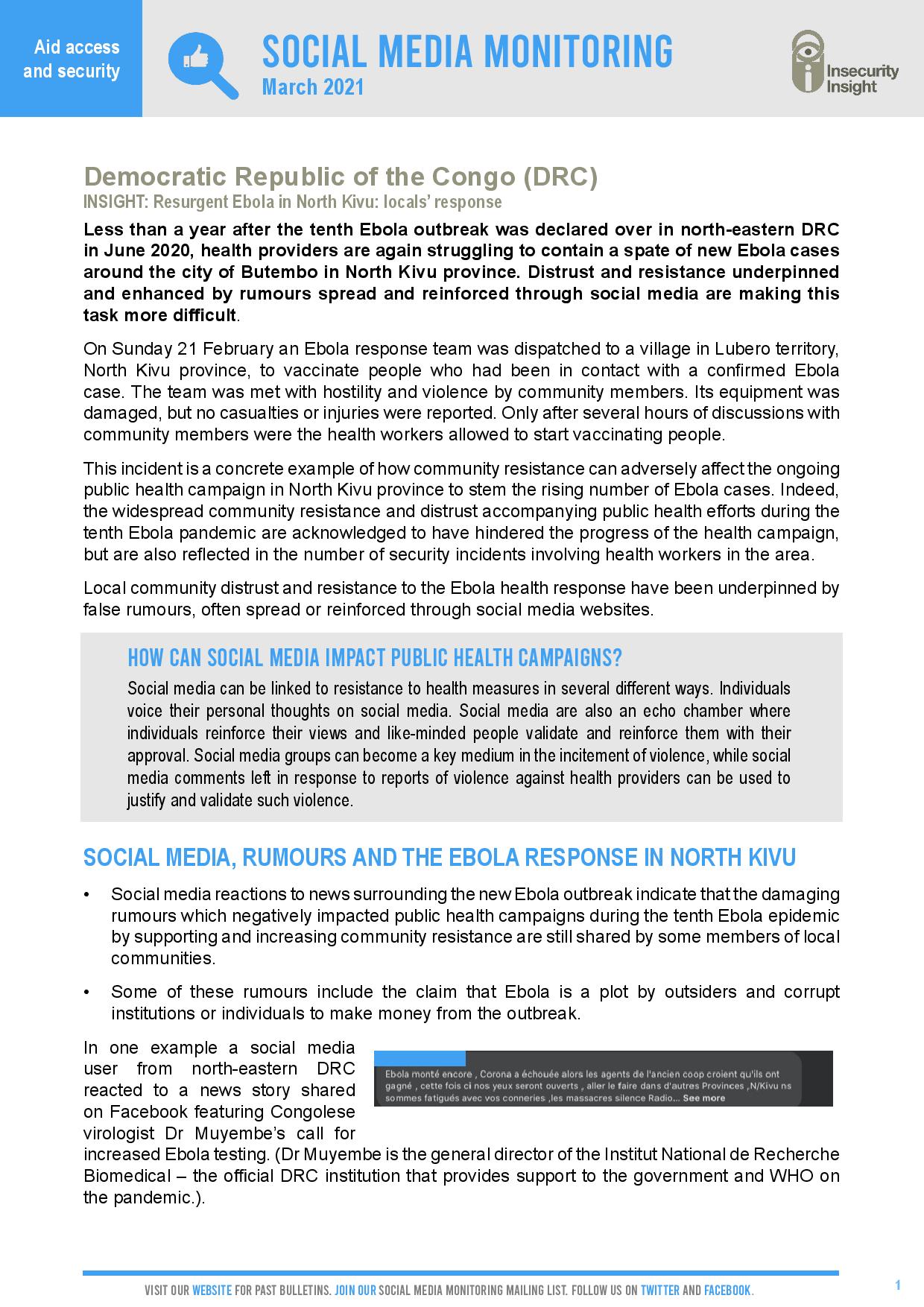
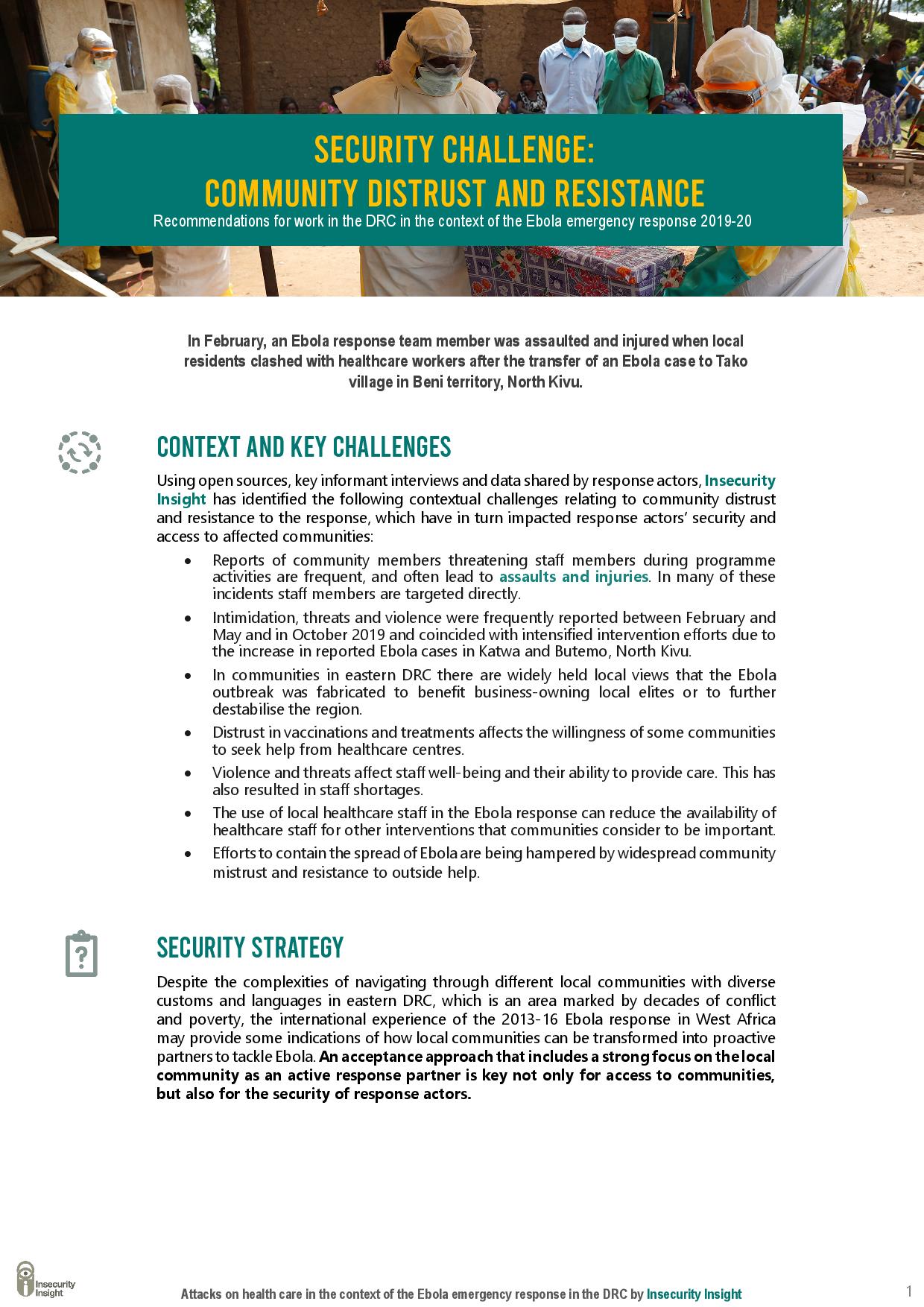
During the 12th Ebola outbreak in North Kivu province between 07 February to 03 May 2021, 12 cases of Ebola were recorded and six people died from the disease. Our social media monitoring indicates that the damaging rumours which negatively impacted public health campaigns during the 10th Ebola outbreak are still shared by some members of local communities.
11th Ebola Outbreak
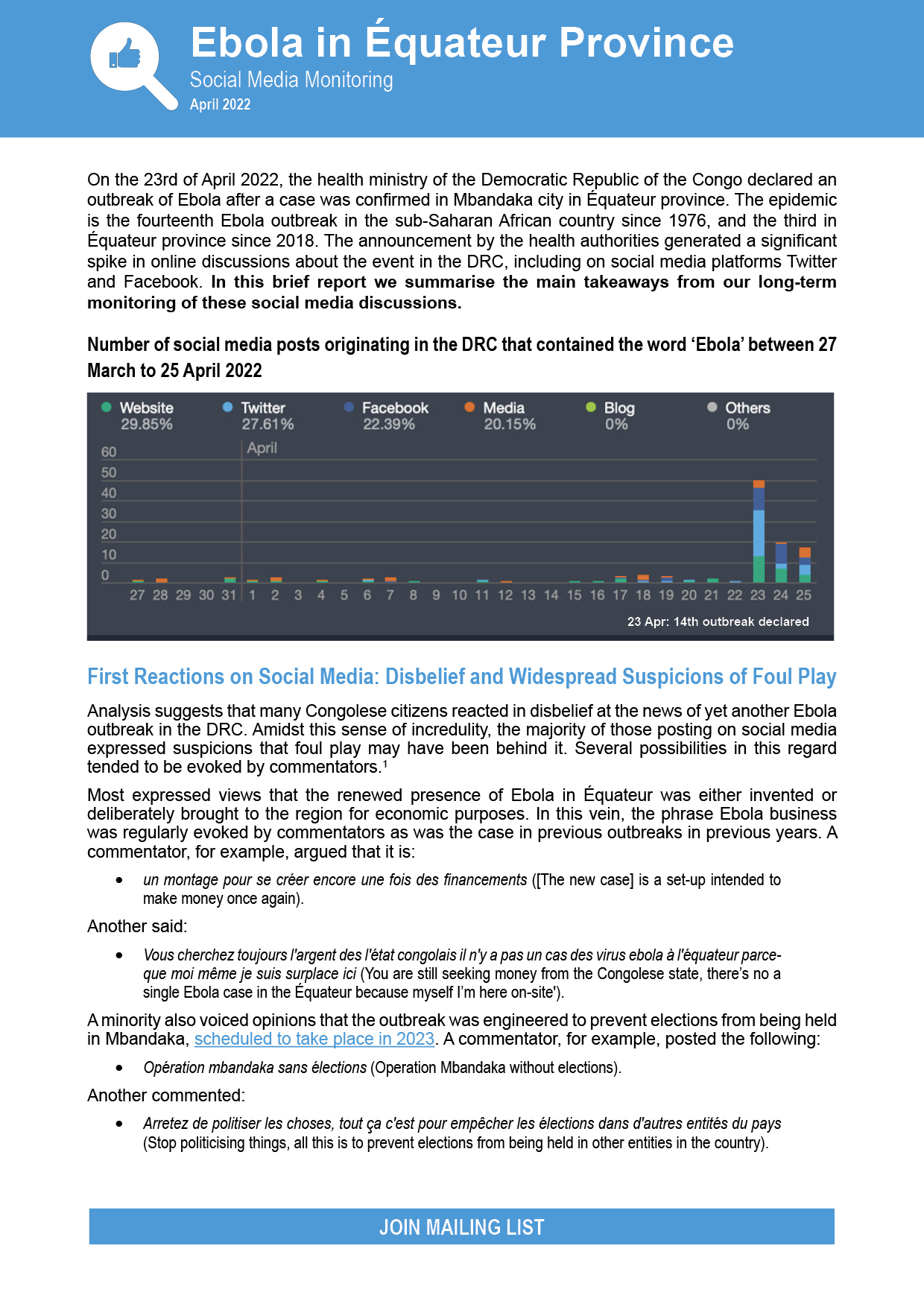
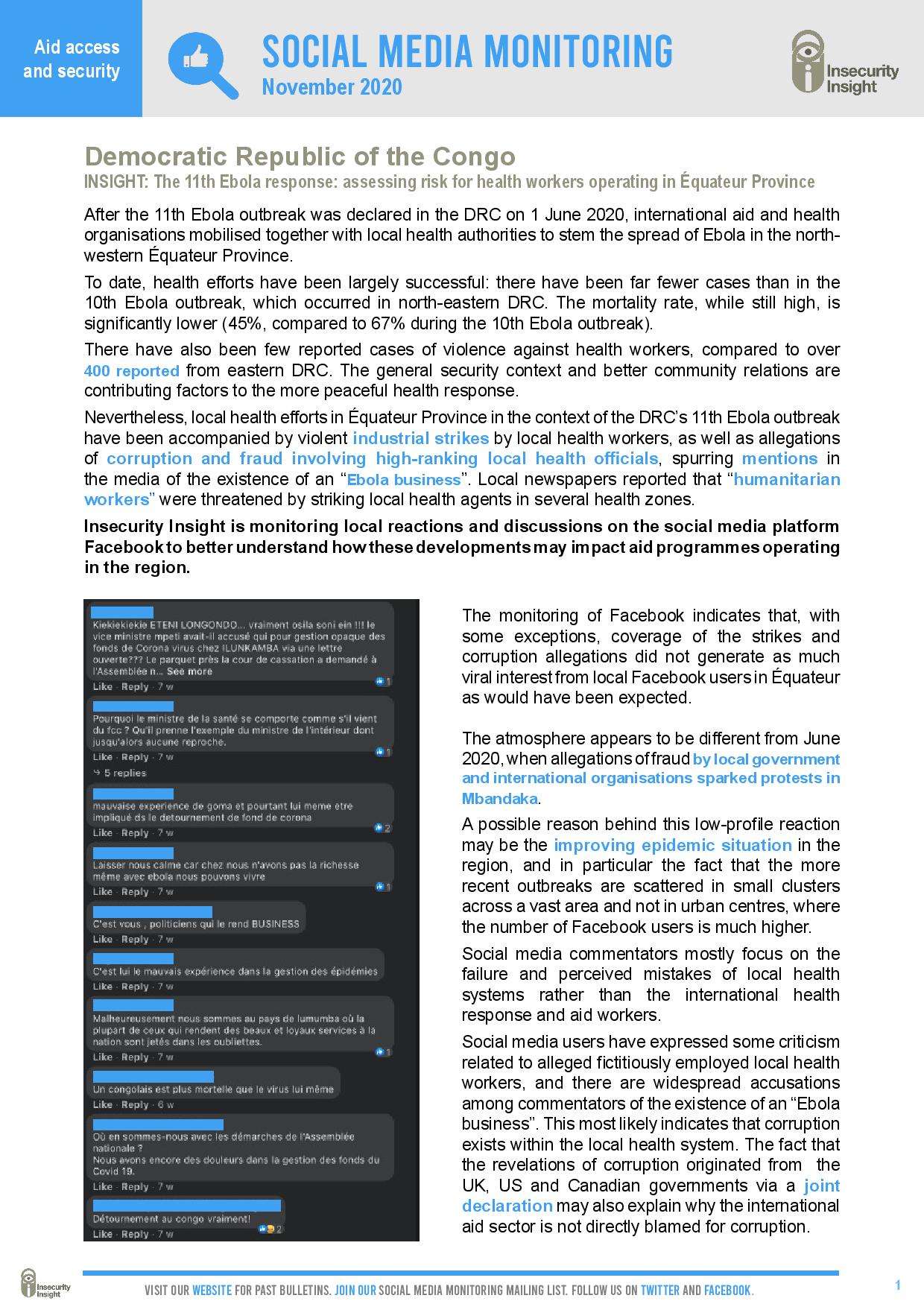
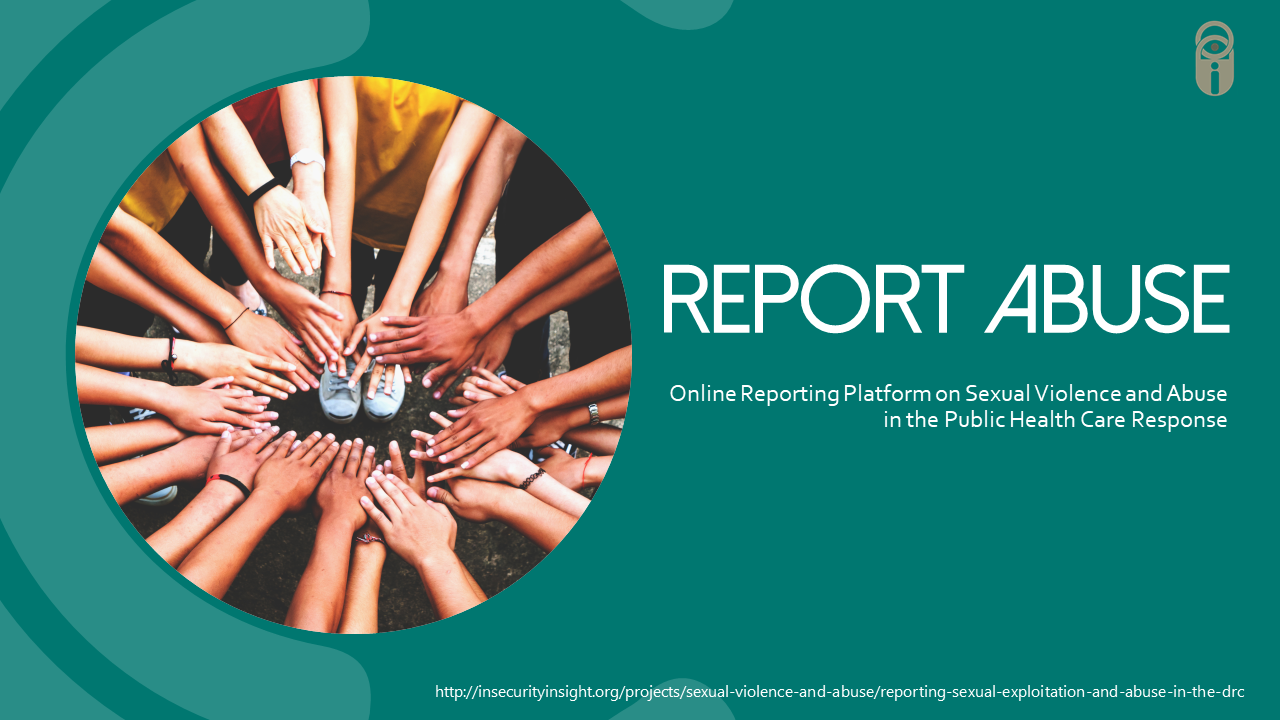
During the 11th Ebola outbreak in the Equateur region between 1 June 2020 and 18 November 2020, 130 cases of Ebola were recorded and 55 people died from the disease. Our social media monitoring suggests that many Congolese citizens reacted in disbelief at the news of yet another Ebola and expressed views that the renewed presence of Ebola in Équateur was either invented or deliberately brought to the region for economic purposes. In this vein, the phrase Ebola business was regularly evoked by commentators. A reporting platform on sexual violence and abuse.
10th Ebola Outbreak
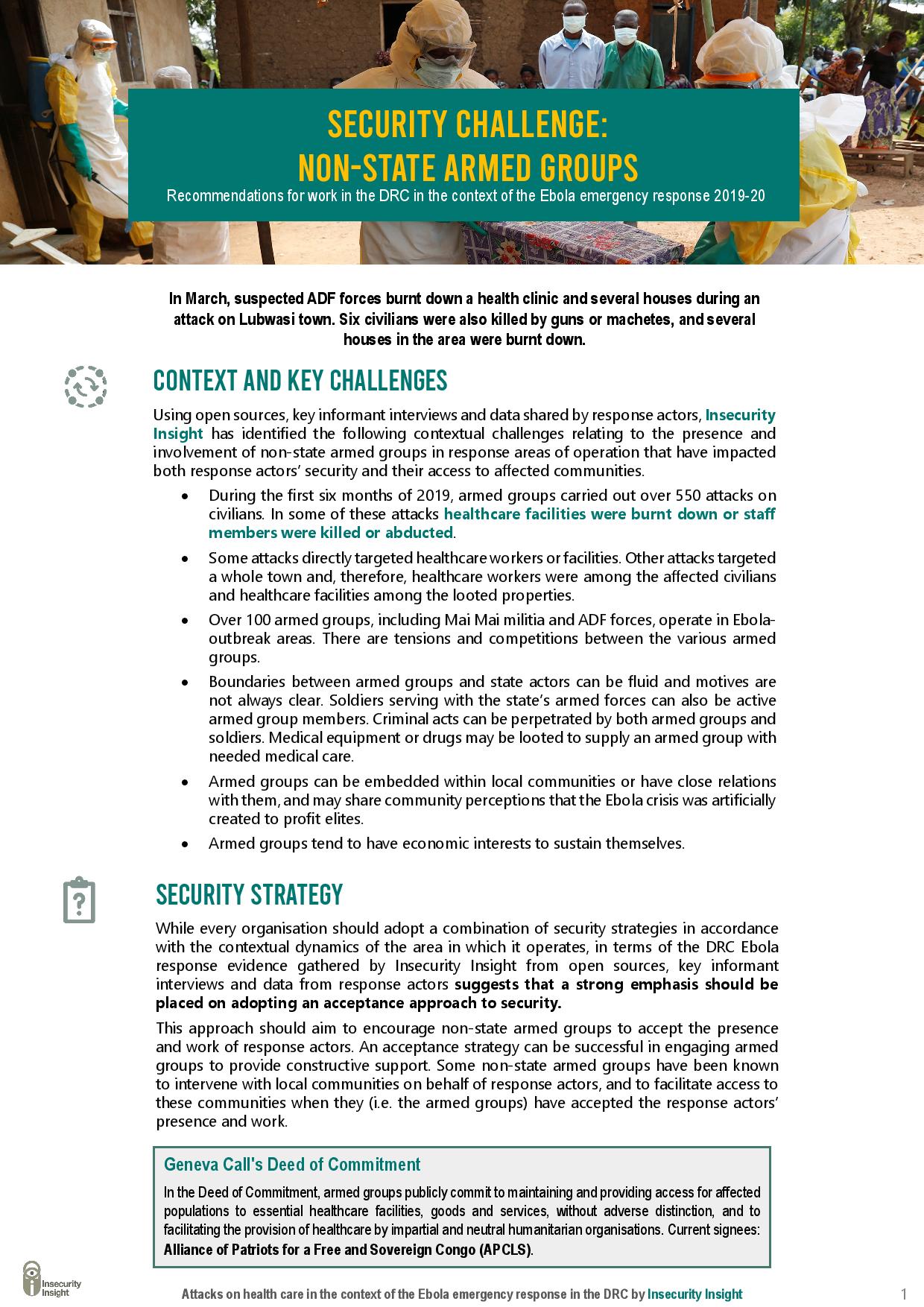
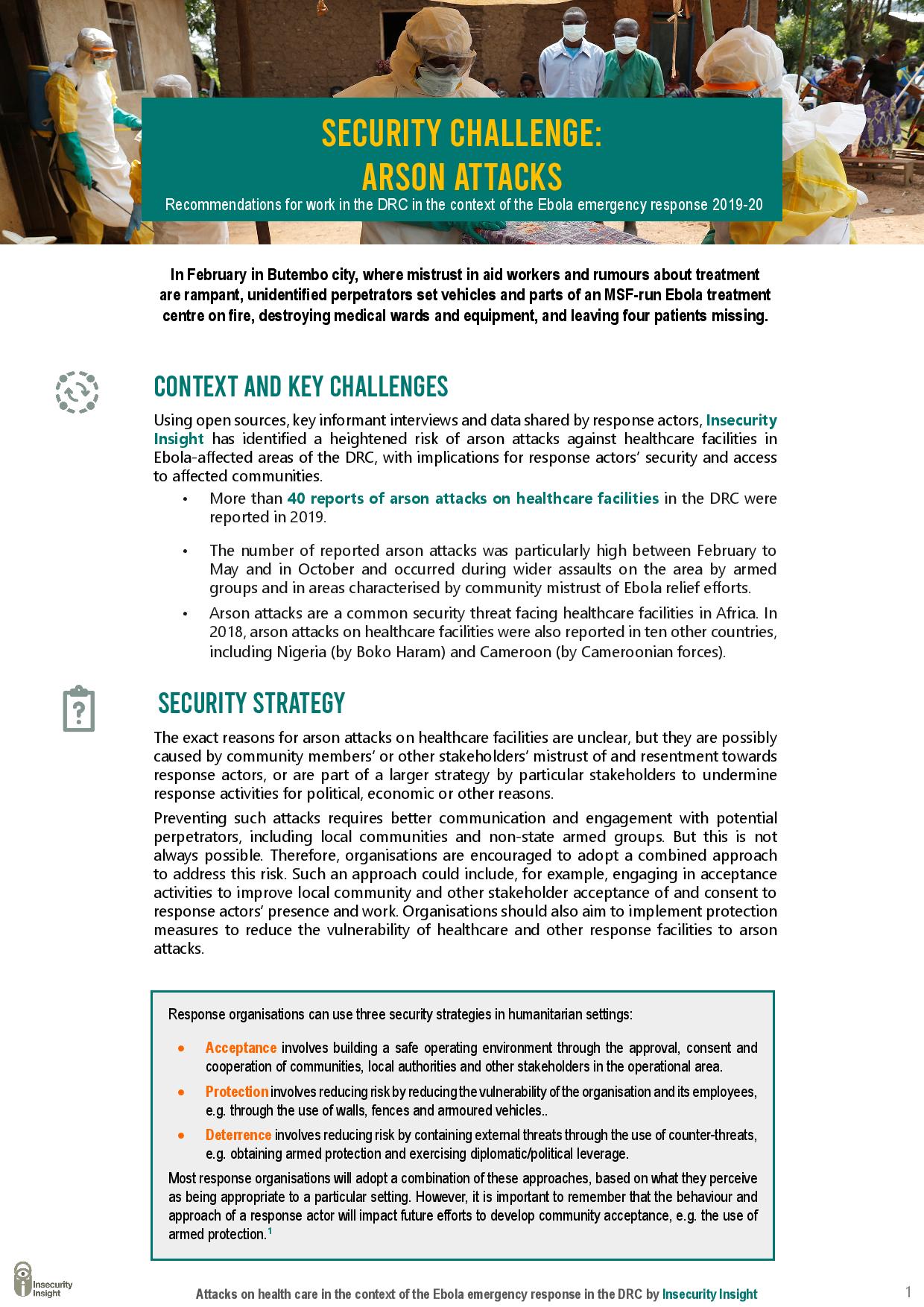
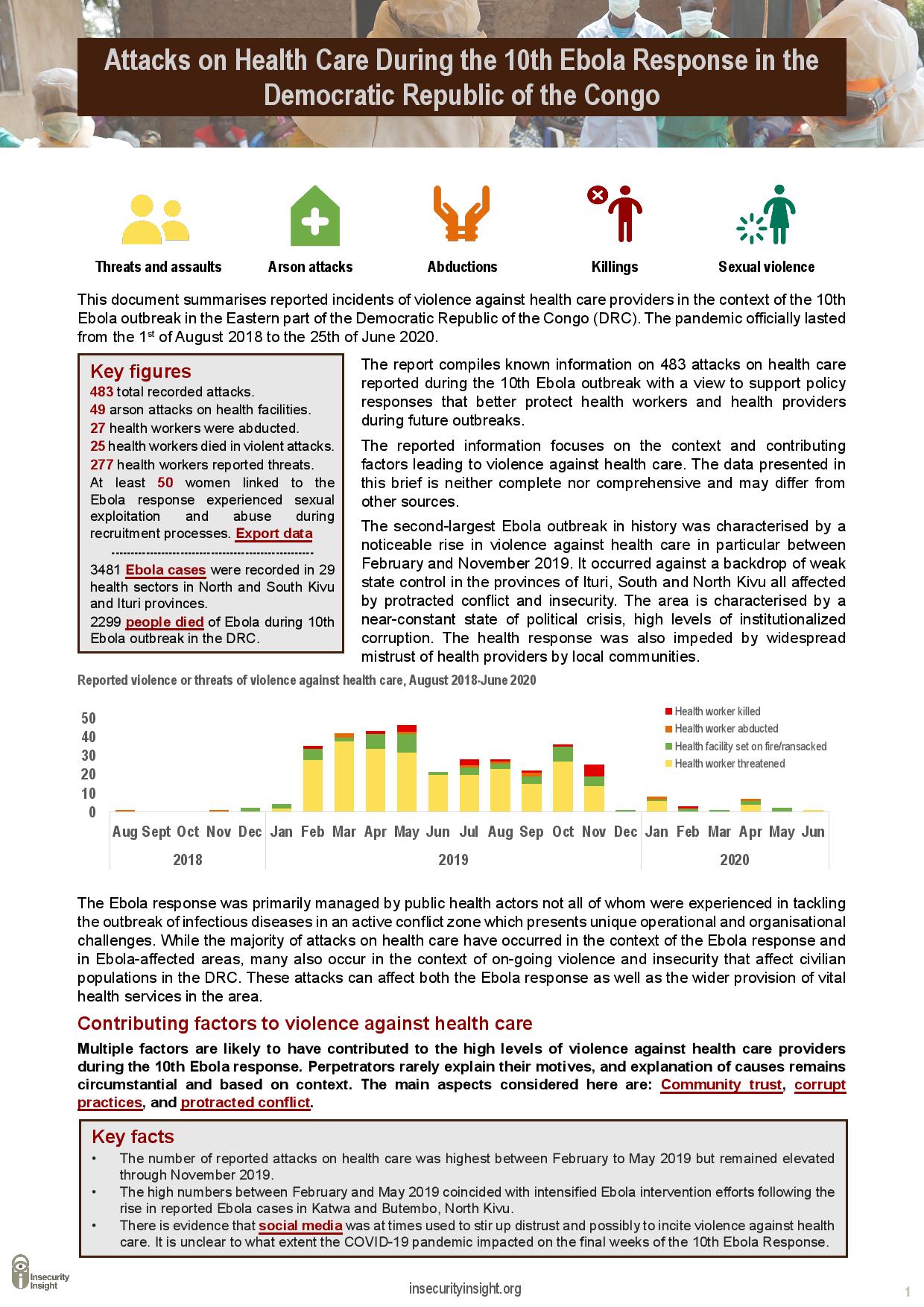
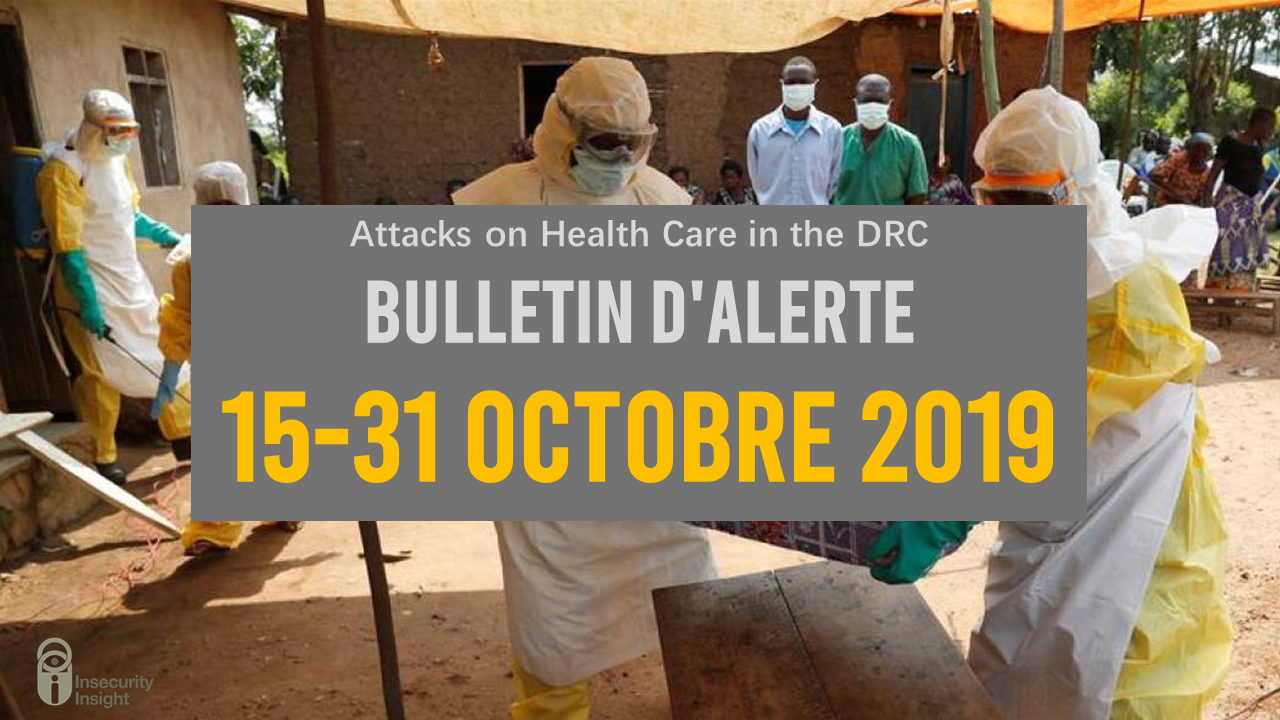
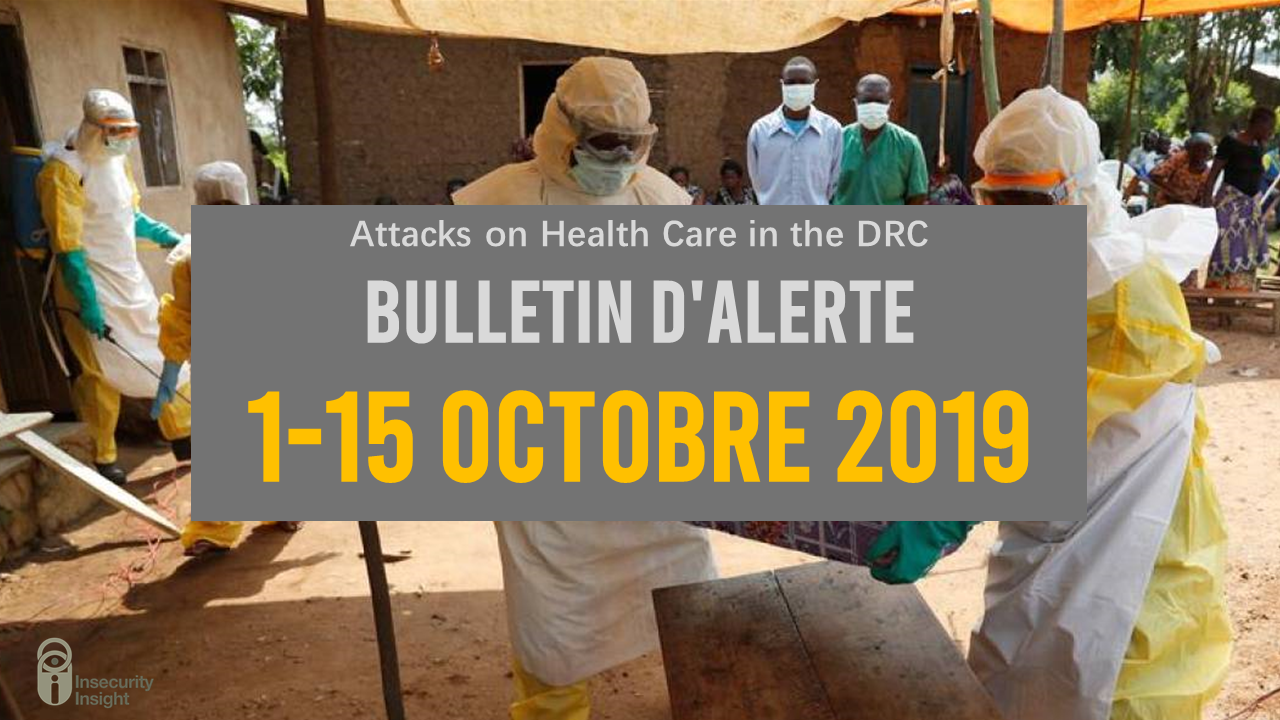
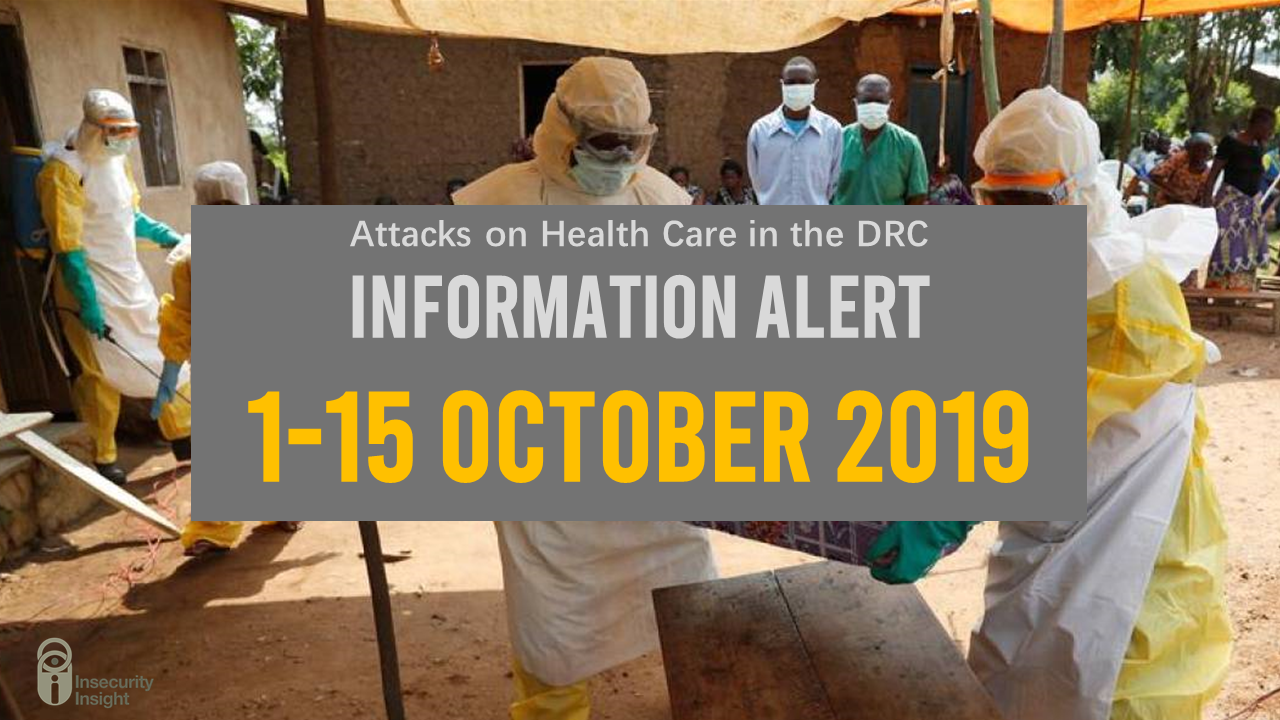
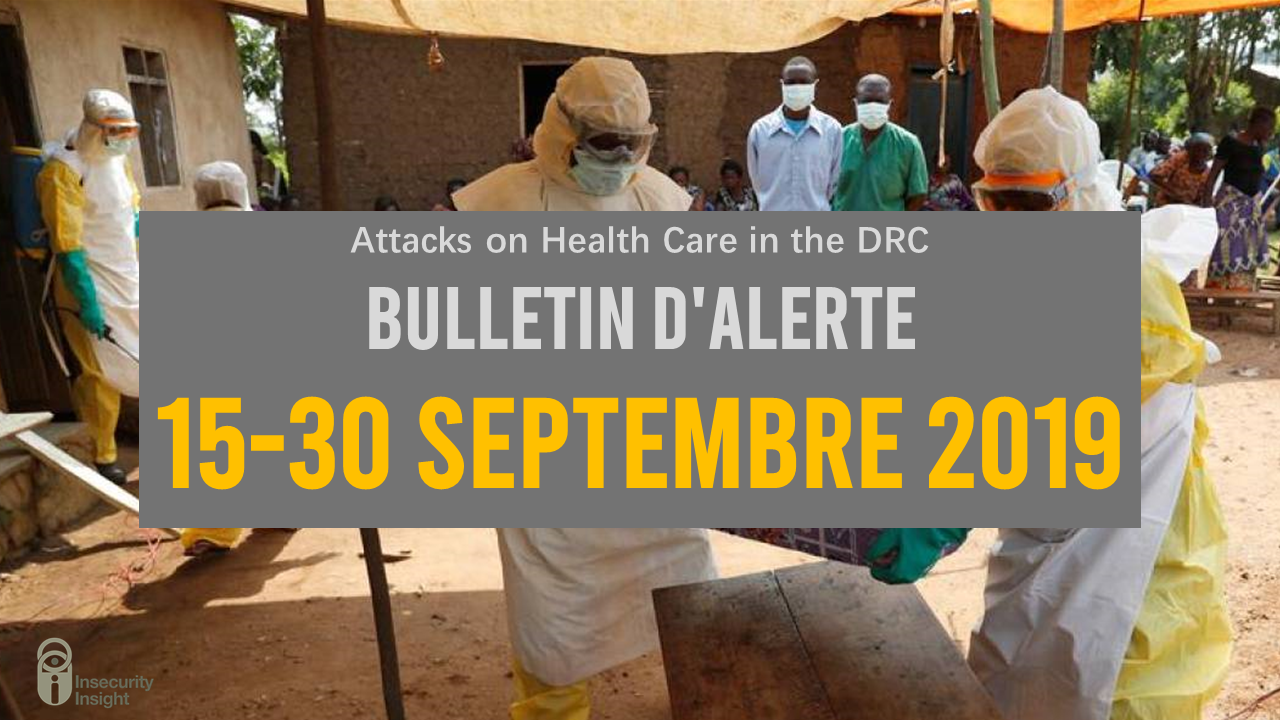
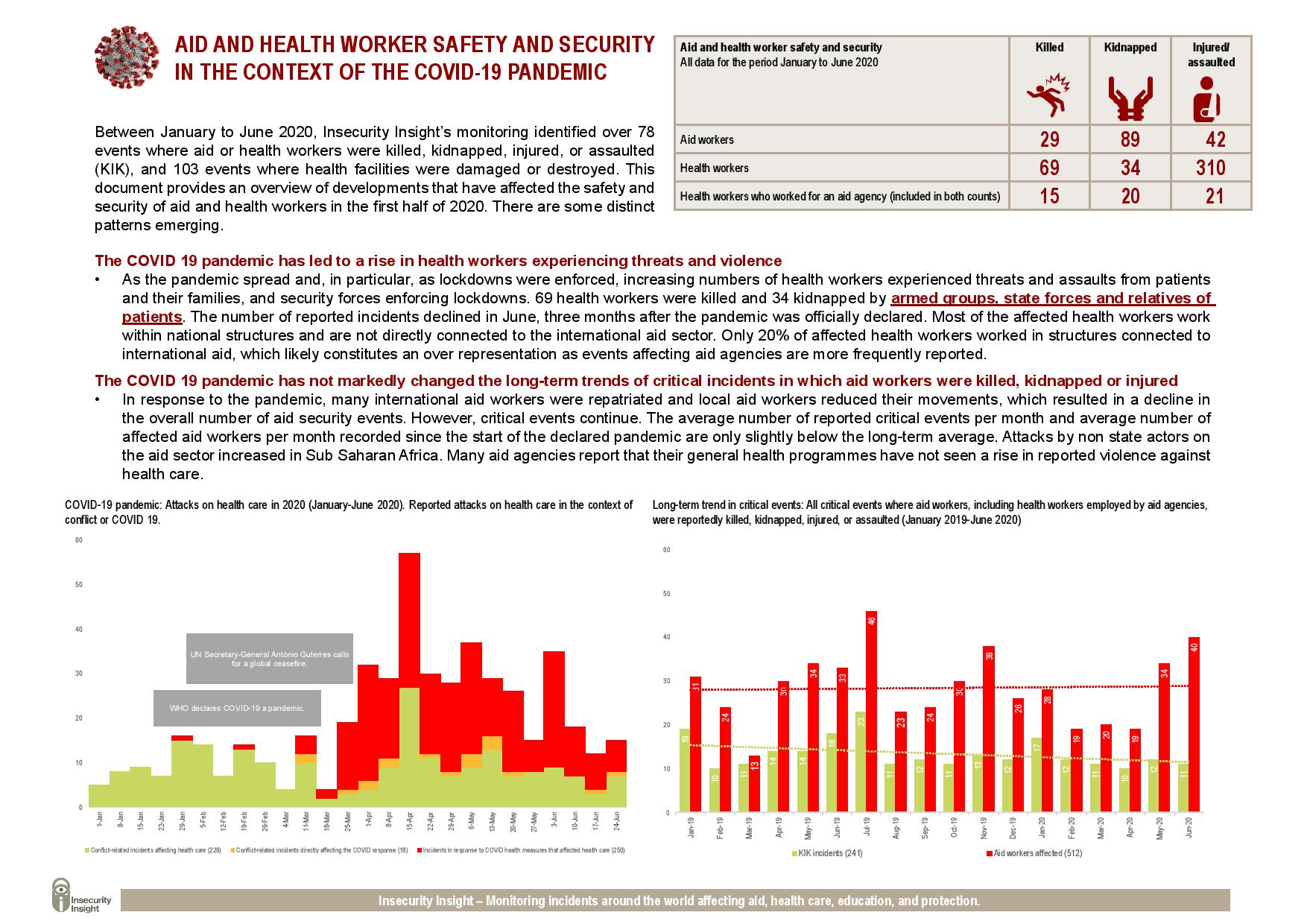
During the 10th Ebola outbreak between 1 August 2018 and 25 June 2020, 3,470 cases of Ebola were recorded and 2,287 people died from the disease. Over 400 attacks and threats against health workers in the area were reported, during the 10th Ebola response (Nov 2022 and Dec 2019).
These figures exemplify the challenges of rolling out an emergency response in areas outside of government control where the healthcare system is weak, ongoing conflict is under way, and historical tensions exist between local communities and the central government. The data and contextual dynamics particularly highlight the complexities of gaining community acceptance in areas affected by conflict and where armed groups maintain control over territories.
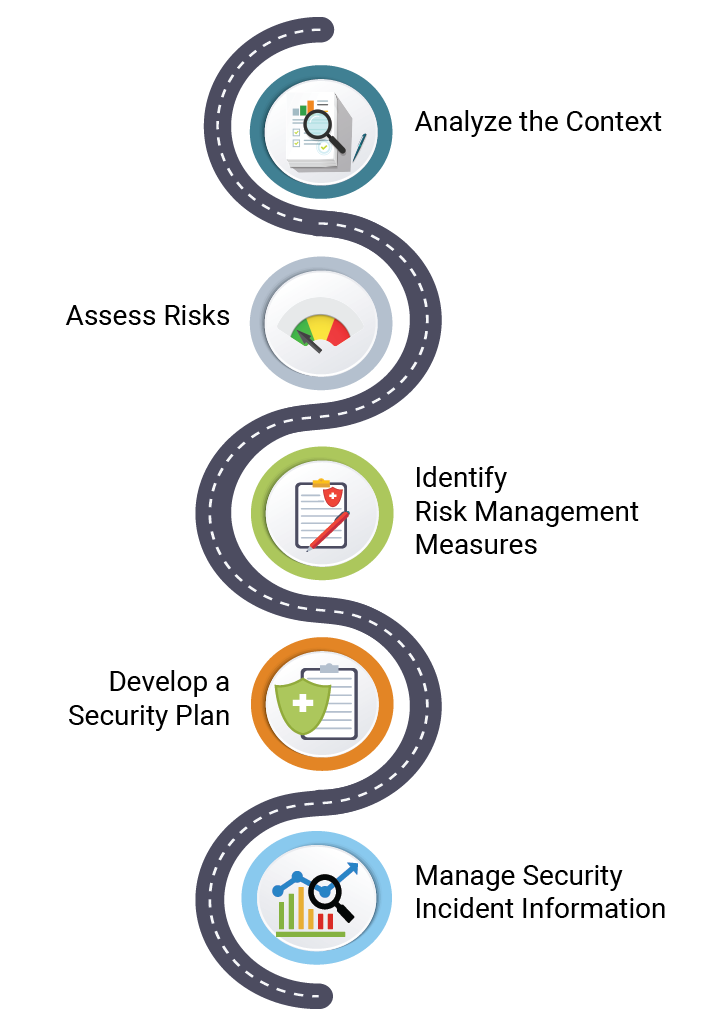
For practical recommendations for implementing appropriate security risk management measures to enable response actors, including health care workers, to effectively address security challenges, see our Lessons Learned report or take our 15 minute Emergency Healthcare in Insecure Settings mobile guide. Access the guide on DisasterReady! or download PDF
Allegations of widespread sexual exploitation and abuse by aid workers working in this Ebola response were also rampant.