Sudan

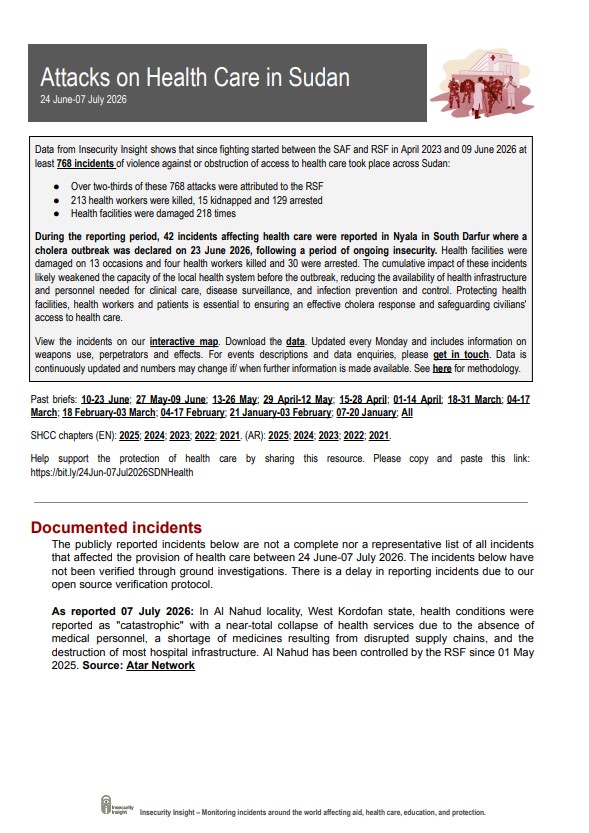
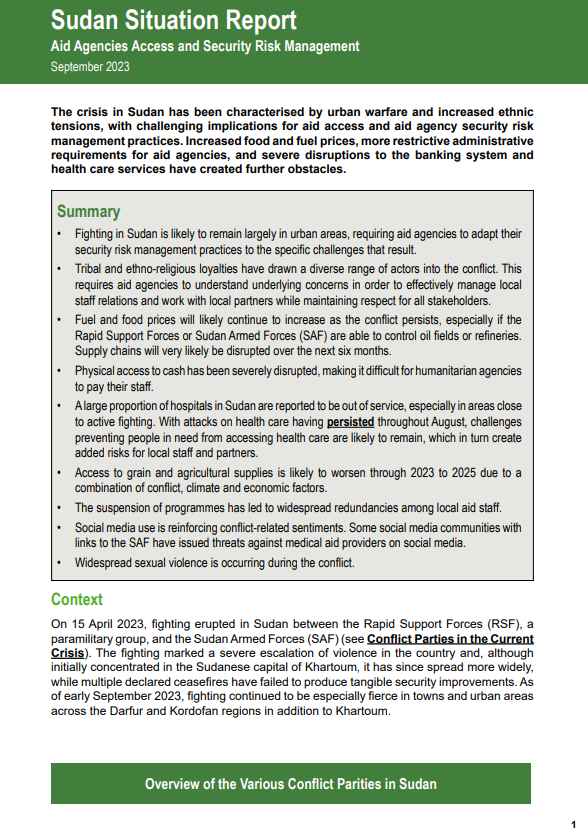
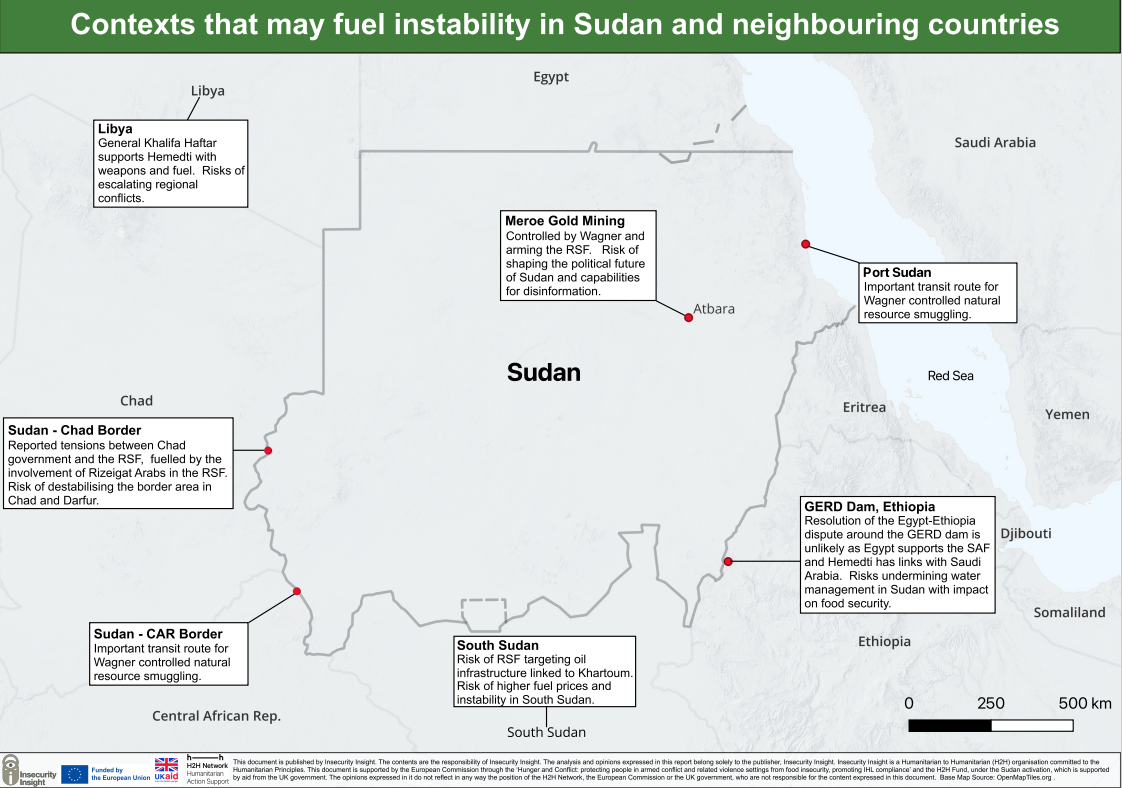
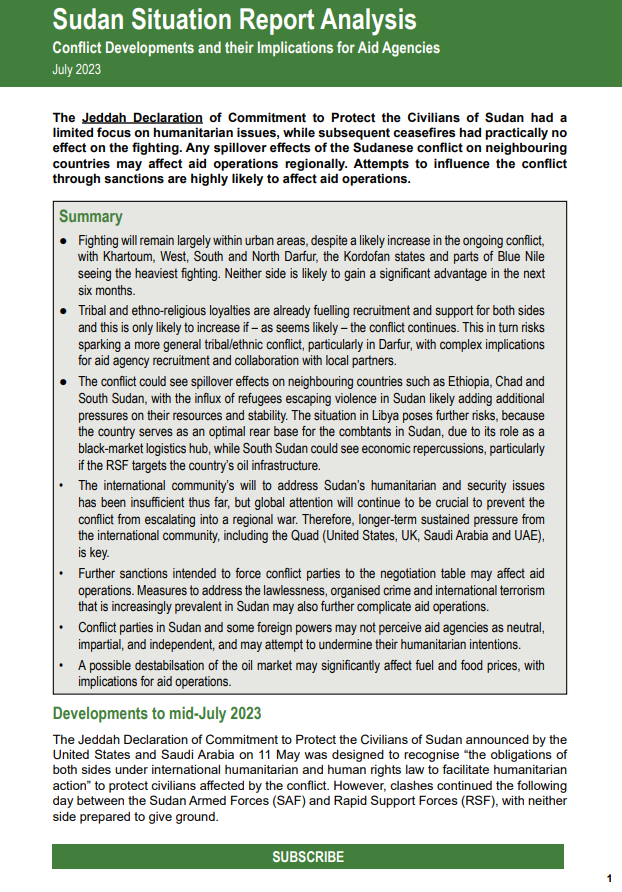
Since violence erupted between the Sudanese army and a paramilitary force in April 2023, mass forced displacement and acute food insecurity have been created amidst attacks on hospitals and other vital civilian infrastructure.

Insecurity Insight monitors conflict events affecting aid operations, education, food and water systems, health care and protection as well as incidents of conflict-related or political-related sexual violence and explosive weapons use in Sudan.

Our data can be downloaded on the Humanitarian Data Exchange (HDX) and corresponding reports can be accessed below.

Quick Links

Health Care

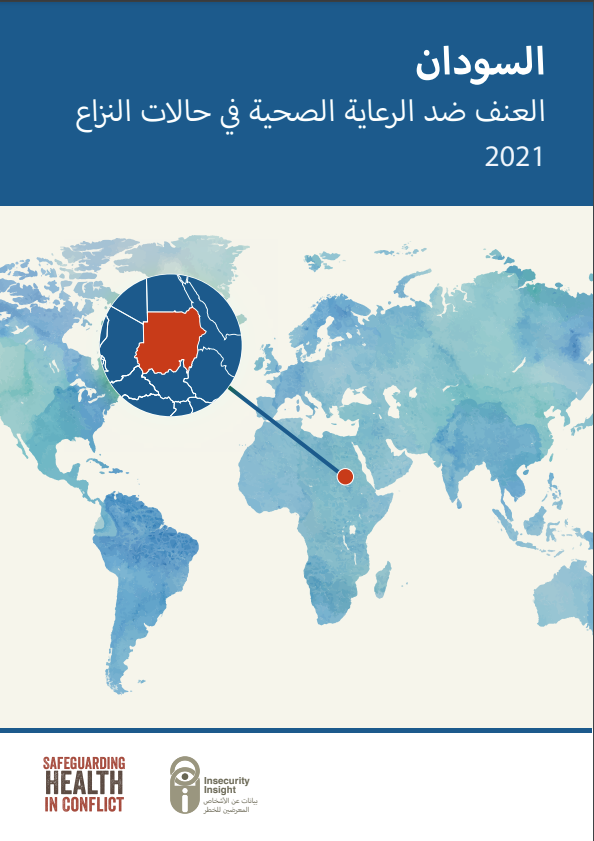
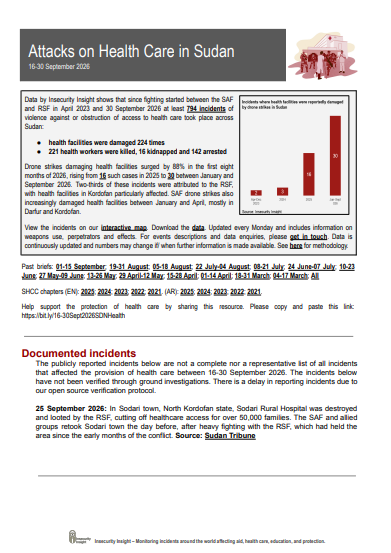
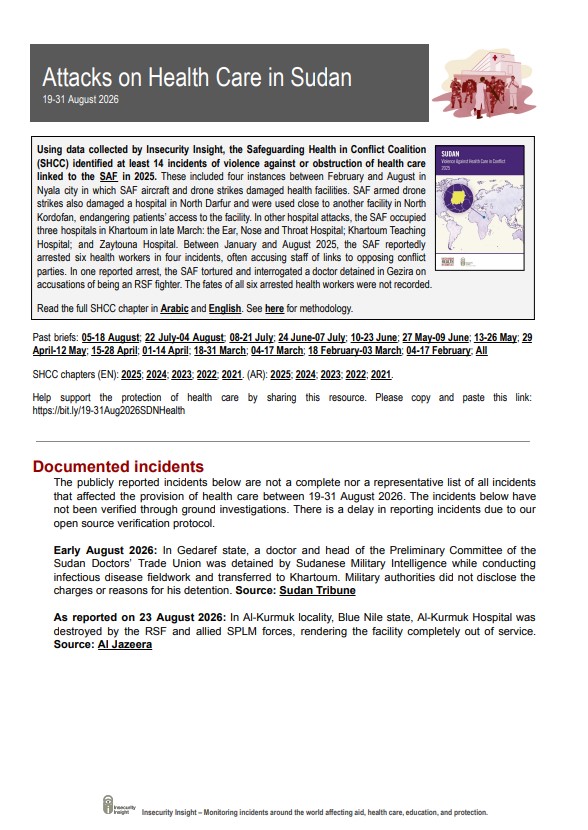
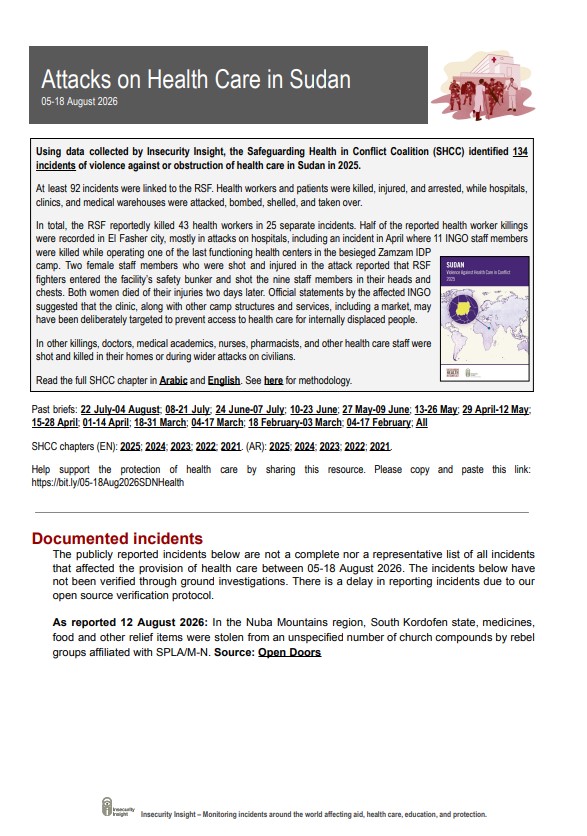
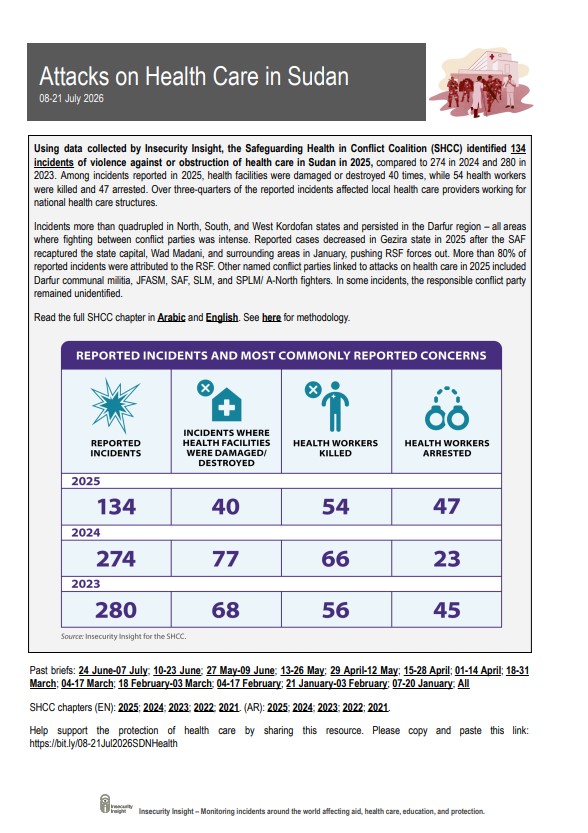
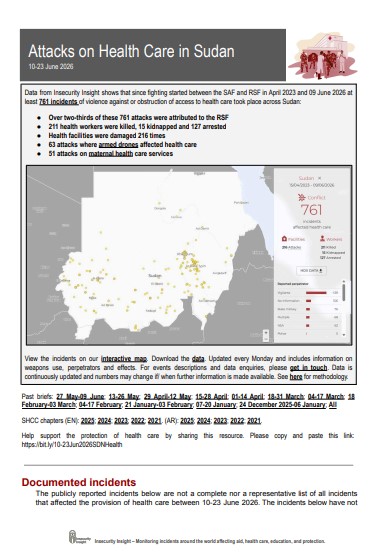
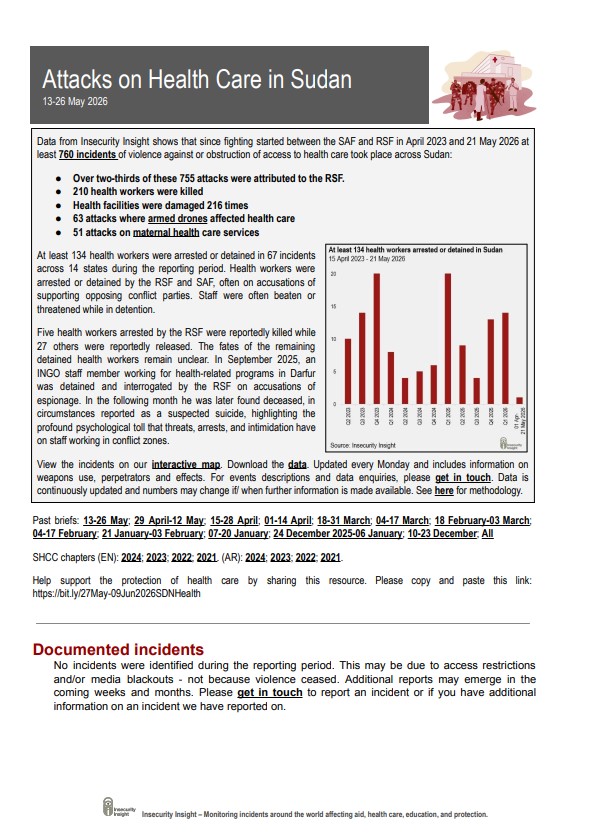
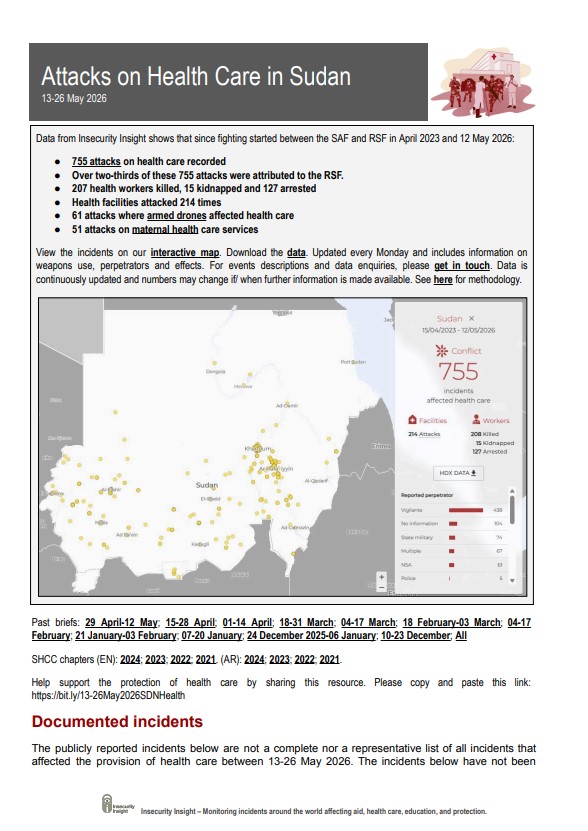
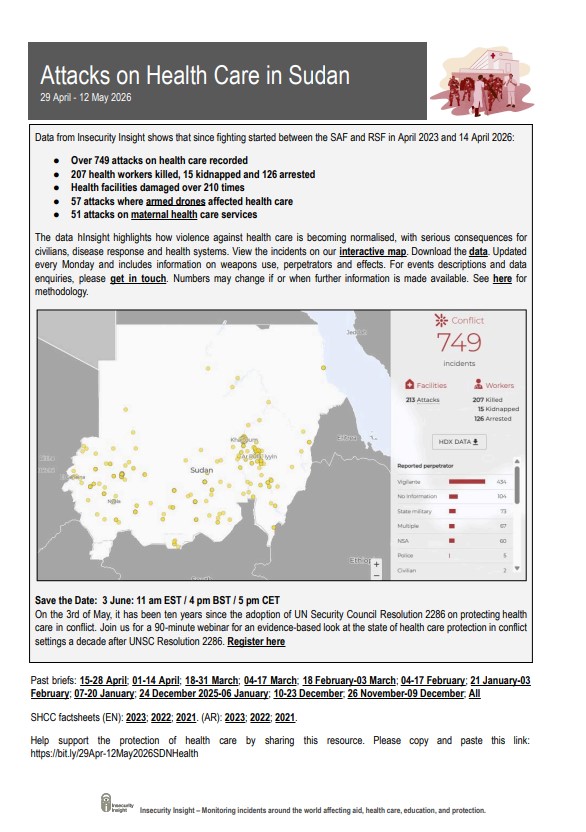
Insecurity Insight monitors attacks on health care in Sudan, and based on its data, in the Sudan chapter (in Arabic and English) of the 2025 Safeguarding Health in Conflict Coalition (SHCC) report Care in the Crosshairs identified 134 incidents of violence against or obstruction of health care in Sudan in 2025. Health facilities were damaged or destroyed 40 times, while 54 health workers were killed and 47 arrested.

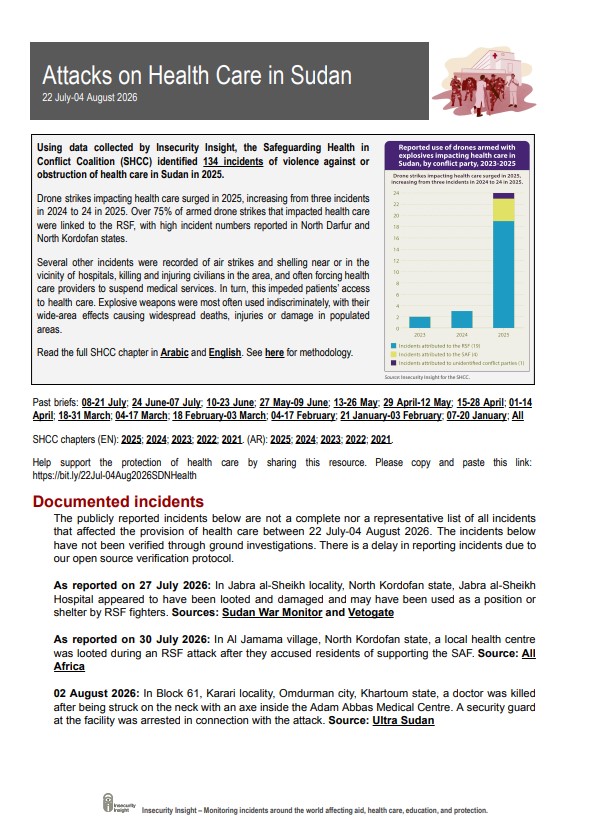
Incidents more than quadrupled in North, South, and West Kordofan states and persisted in the Darfur region – all areas where fighting between conflict parties was intense. Drone strikes impacting health care surged in 2025, increasing from three incidents in 2024 to 24 in 2025. Over 75% of armed drone strikes that impacted health care were linked to the RSF, with high incident numbers reported in North Darfur and North Kordofan states.

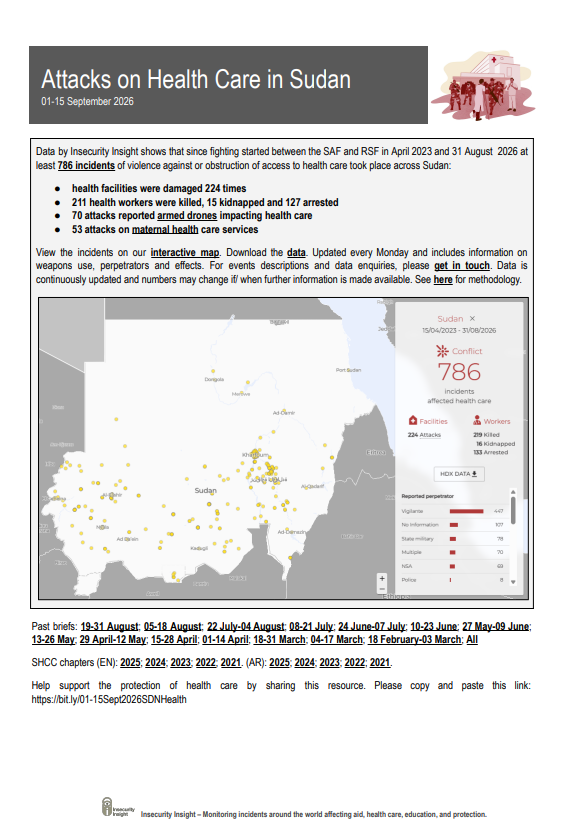
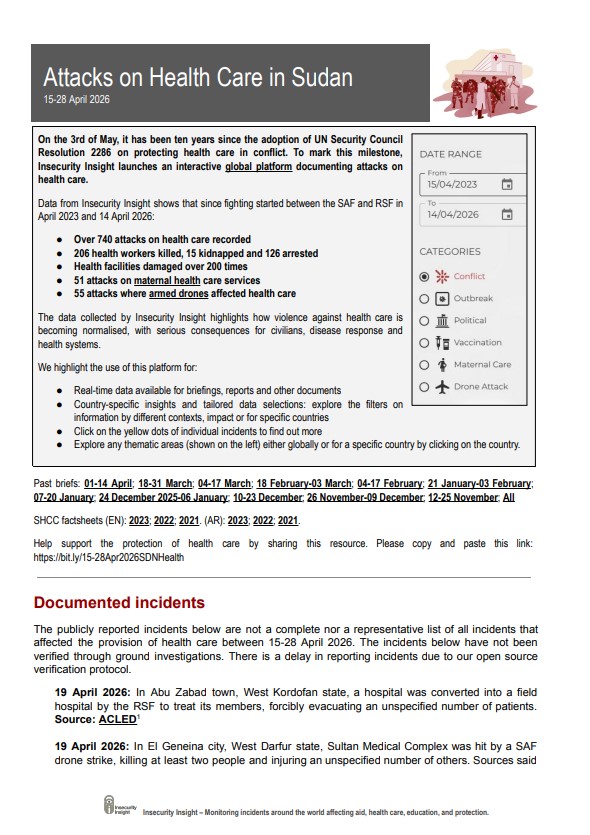
Published every two weeks, Insecurity Insight’s Attacks on Health Care New Brief tracks global threats and violence as well as protests and other events affecting the delivery of and access to health care. Explore our interactive map to see where incidents happened.
Sexual Violence

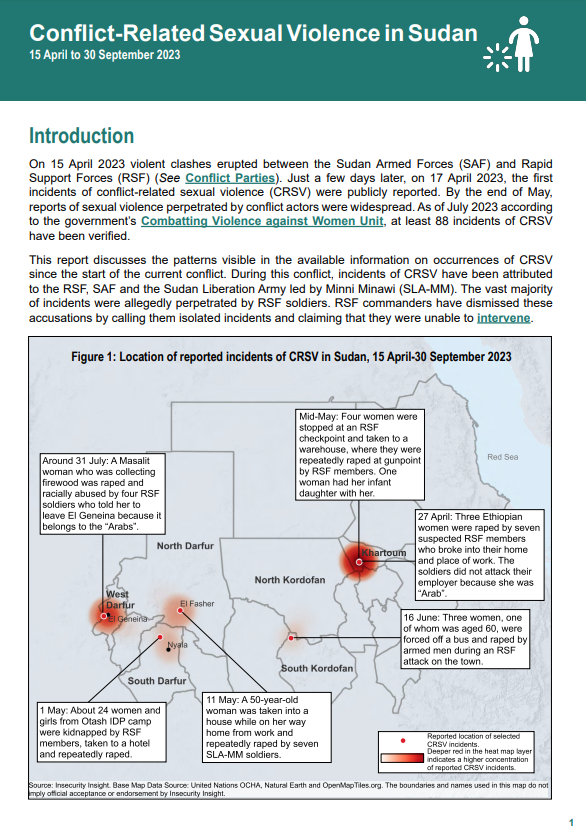
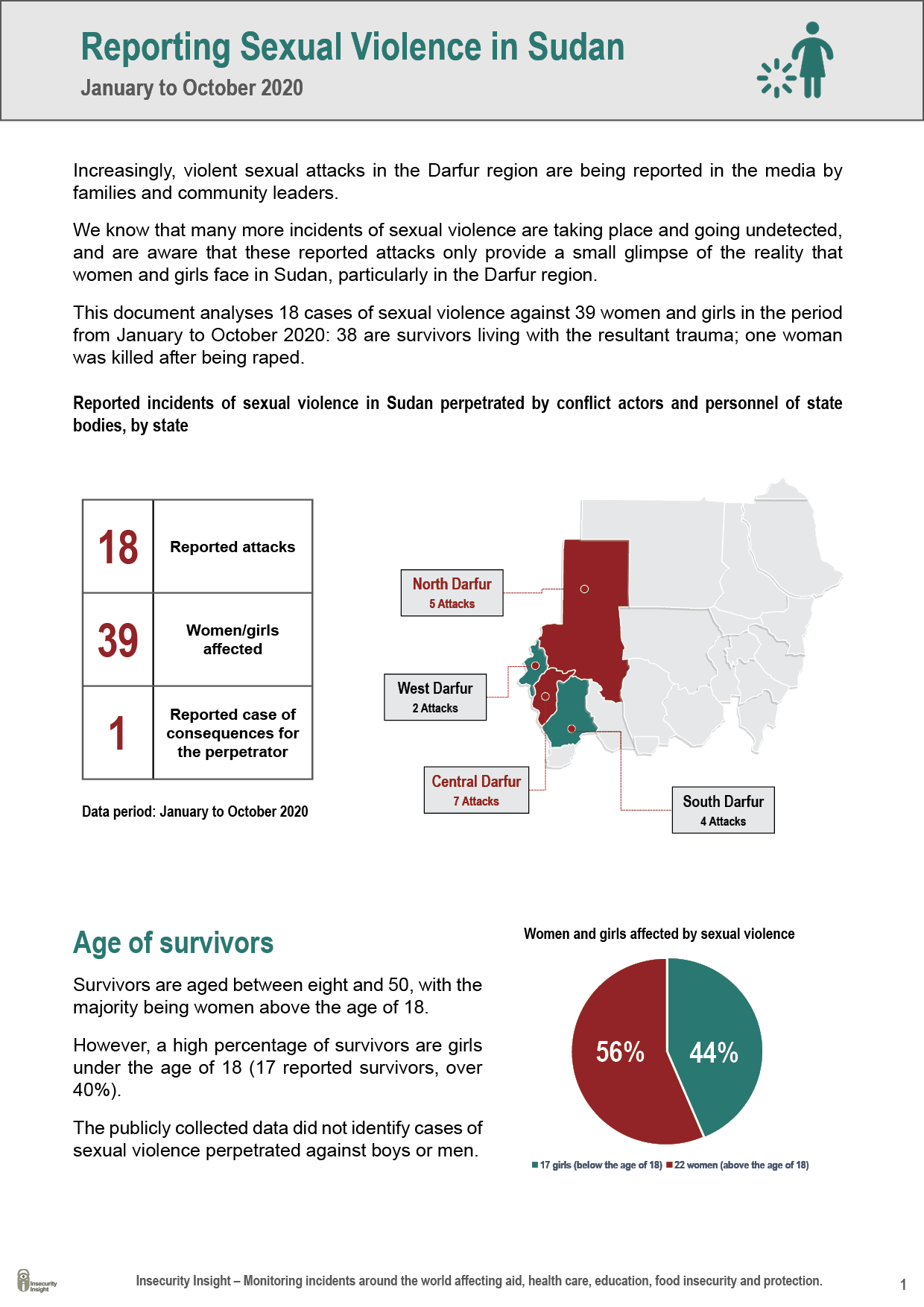
Insecurity Insight documents reported incidents of sexual violence in Sudan. Although many incidents go unreported, our data – available for download here – provides insights into their traumatic consequences.
Insecurity Insight’s latest report on this topic analyses 18 cases of sexual violence against 39 women and girls in the Darfur region in the period from January to October 2020. It demonstrates that women and girls were frequently at risk of being targeted with sexual violence whilst pursuing daily activities but that the perpetrators were rarely held accountable. Documentation is key to overcoming this.